


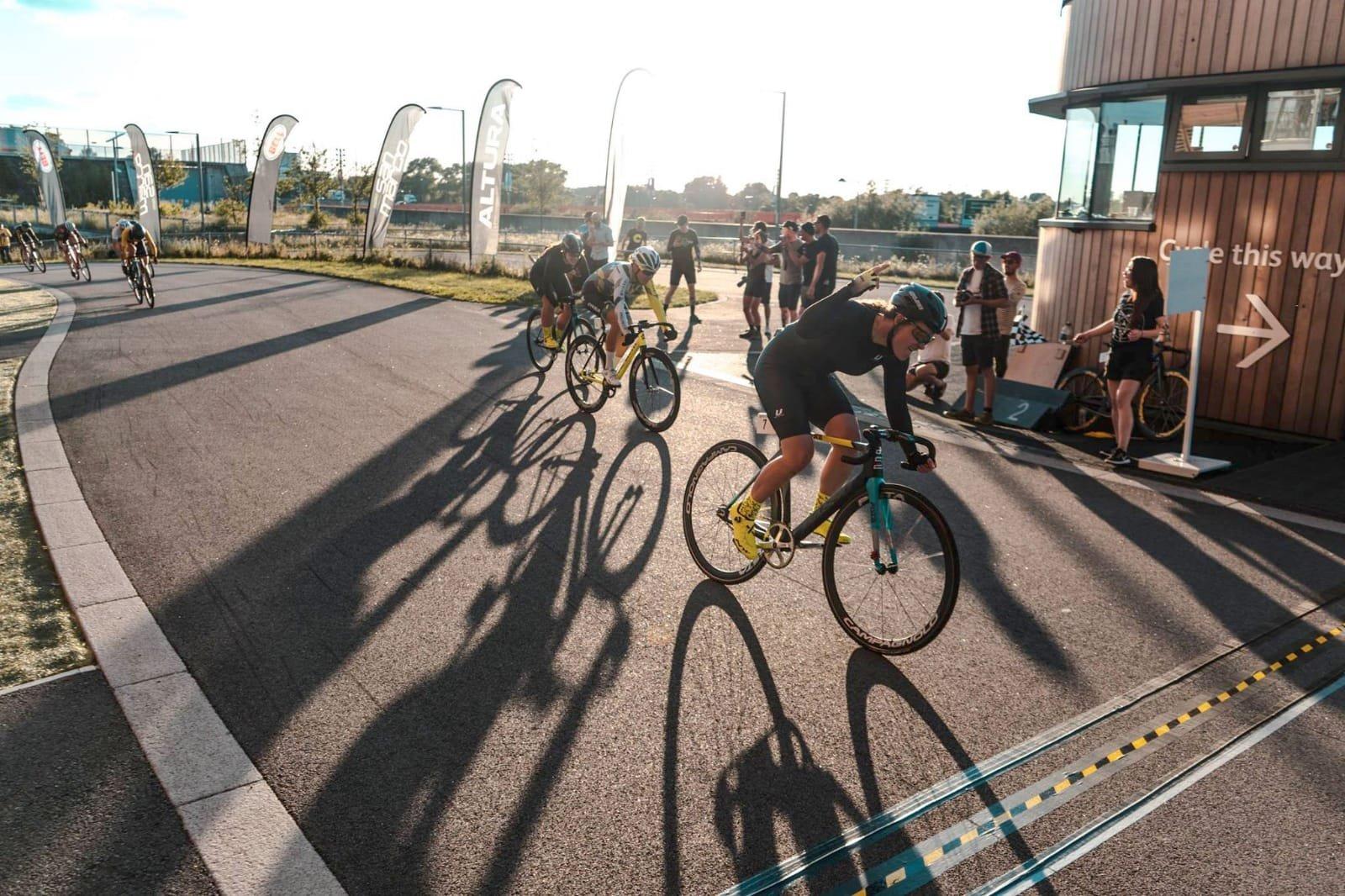

We offer a range of services to help you become a better cyclist, including cycling skills sessions and tailored training plans.
Our cycling skills sessions are designed to help riders of all levels improve their technique, confidence, and safety on the road. Led by experienced coaches, our sessions cover a range of skills, including cornering, descending, group riding, and bike handling. Whether you're new to cycling or a seasoned pro, our skills sessions are a great way to improve your riding and get more enjoyment out of every ride.
But we don't just stop there. Our tailored training plans are designed to help you achieve your cycling goals, whether you're training for a big event, a race season, or just looking to improve your fitness and performance. Our coaches work with you to develop a training plan that's tailored to your goals, fitness level, and schedule, ensuring that you get the most out of every training session and see real results.
We're passionate about cycling and helping riders of all levels achieve their goals. Whether you're looking to become a stronger, more confident cyclist, or just want to enjoy your rides more, we're here to help.
- 2 Sassen gefällt das
- 46 Beiträge
- 2 Fotos
- 0 Videos
- 0 Vorschau
- Road
- Saddle Up!

 English
 Arabic
 French
 Spanish
 Portuguese
 Turkish
 Dutch
 Italiano
 Russian
 Romaian
 Portuguese (Brazil)
 Greek
Jüngste Beiträge
- WWW.SADDLEUPCOACHING.CO.UKPower Testing for Cyclists: What to Test and HowYou cannot train well without knowing where you start. Testing gives you your zones, shows your strengths and weaknesses, and tells you if the training is working.What to test5 to 15 second power. Your sprint and explosive power.1 minute power. Anaerobic capacity, for attacks and short climbs.5 minute power. Your aerobic ceiling. A good estimate of VO2max and pVO2max.20 minute or threshold power. The basis for FTP and your training zones.How to testWarm up well, around 15 to 20 minutes. Test on a steady climb, a quiet flat road or the turbo, and always in the same place and conditions so the results compare.Sprints: two or three all-out efforts of 6 to 10 seconds with full recovery.1 and 5 minutes: one all-out effort each, well recovered in between.20 minutes: a hard, evenly paced effort. FTP is roughly 95% of your average.Critical Power: three or four maximal efforts between 3 and 20 minutes on separate days give a fuller picture than FTP alone.Put your numbers into our power calculator for FTP, Critical Power, VO2max, zones and a power profile.Using the resultsSet your training zones from the result.Compare your profile: a sprinter, a climber or a diesel. Train the weakness, race the strength.Retest every 6 to 8 weeks, usually at the start of a new block. See how to structure your season.Going furtherPower tests tell you what you can do. A lactate test tells you why, showing where your thresholds really sit. If you have your own analyser, our lactate protocols tool finds LT1 and LT2 from your data.Building your power profilePut your best 5-second, 1-minute, 5-minute and 20-minute numbers side by side, in watts per kilo. Compare them and you get a picture of what kind of rider you are.Sprinter: high 5-second and 1-minute numbers relative to the rest.Pursuiter: strong 1 to 5 minutes.Time triallist or climber: 20-minute power stands out.All-rounder: fairly even across the board.Our power calculator plots your profile so you can see it at a glance.Testing indoors vs outdoorsIndoor numbers are often a little lower than outdoor ones, mainly because of heat and the lack of momentum. Neither is wrong. Just compare like with like. A big fan indoors makes a real difference.Getting a good testTest fresh, after an easy day or two.Eat as you would before a hard session.Same warm-up, same place, same time of day.Pace long efforts evenly. Starting too hard is the most common mistake.Write down the conditions so you can compare next time.Make it yoursEvery rider is different. Testing is only useful if it changes your training. Grab a free 30-minute consultation and we will talk it through, or see the coaching options.Where nextHow to increase your FTPCycling intervals, types and zonesTime trialling: how to startSaddle up.0 Kommentare 0 Anteile 21 AnsichtenPlease log in to like, share and comment!
- WWW.SADDLEUPCOACHING.CO.UKTime Trialling: How to Start and Go FasterOn the start line, notice the heroes of time trialling, the time keepers! Just you, the road and the clock. Time trialling is the purest test in cycling, and one of the easiest ways to start racing.What is a time trial?Riders set off one at a time, usually a minute apart, and race a set distance against the clock. In the UK most open events are run under Cycling Time Trials (CTT) rules, over distances from 10 to 100 miles, plus hill climbs and sporting courses. Many clubs also run club 10s on summer evenings, which are the perfect first step.What you needA road bike is fine. CTT results now include a road bike category, so you can compare yourself with riders on similar kit.Clip-on aero bars are the cheapest speed you will ever buy, if the event allows them.A rear light. CTT events require one, so check the event details before you ride.Club membership. To enter CTT open events you need to be a member of an affiliated club.Pacing: the big skillMost riders start too hard. Go out 5 to 10% too fast and you pay for it later. Aim for an even effort, slightly harder up hills and into headwinds, slightly easier down hills and with tailwinds. For a 10-mile TT most riders sit close to their FTP. Find yours with our FTP calculator.Get more aeroAt time trial speeds most of your power goes into pushing air. A lower, narrower position that you can still hold and breathe in is worth more than almost any upgrade. Test it with our CdA calculator.Training for time trialshow to increase your FTP. Threshold is the engine of every TT.Long sweet spot training efforts in your TT position, so it feels normal.Practice starts and turns.A solid warm-up of 15 to 20 minutes on race day.Want your thresholds measured properly? Our lactate testing sets your zones from your own physiology.Your first time trial, step by stepJoin a club and find its summer evening 10s.Arrive 45 minutes early to sign on and collect your number.Warm up for 15 to 20 minutes, ending with a couple of short efforts at race pace.Get to the start a few minutes early. A pusher-off may hold your bike.Go out steady. Build into it over the first couple of minutes.Push through the finish line, not to it.Common time trial distances10 miles: the classic starting point. 20 to 30 minutes for most riders.25 miles: the next step. See how to pace a 25.50 and 100 miles, 12 and 24 hours: for those who like it long.Hill climbs: autumn favourites, short and brutal.Equipment that matters mostIn rough order of value for money: a good position, clip-on bars, a skinsuit or tight kit, an aero helmet, fast tyres, then deeper wheels. A dedicated TT bike comes last. Test changes with our CdA calculator.Train with usReady to go faster against the clock? Our remote coaching starts at 140 a month, with a weekly call and a plan that changes as you do. Book a free 30-minute chat to see if it fits.Read nextHow to increase your FTPPower testing for cyclistsHow to structure your seasonSaddle up.0 Kommentare 0 Anteile 42 Ansichten
- WWW.SADDLEUPCOACHING.CO.UKYour First Road Race: A Beginner's GuideYour first race is nerve-racking. It is also brilliant. Here is what you need, what to expect and how to make the most of it. Watch: Stop Wasting Watts: Smart Positioning Wins Races!. More on our YouTube channel. What you needA road bike in good working order. No need for carbon or deep wheels. Brakes, gears and tyres checked, 23 to 30 mm tyres, and lights, saddle bags and mudguards off.A helmet. Properly fitting. You cannot race without one.Kit. Jersey and shorts or bibs. Clipless shoes and pedals.A licence. British Cycling road races need a racing licence. Many regional and lower-category races also offer a day licence, so you can try it first. Check the event details.Choosing your raceStart with a circuit race or crit on a closed track. Laps are short, there is no traffic, and if you get dropped you can learn and go again next week. Look for regional, beginner or fourth-category races on the British Cycling calendar. Results earn points that move you up the categories as you improve.Skills to practise firstRiding close to other wheels without panicking.Holding a line through corners at speed.Moving up the bunch and finding shelter.Accelerating out of corners again and again.All of these are coachable, and much easier to learn before race day. Our skills sessions cover group riding, cornering and race craft, one to one or in a group.Fitness for racingRacing is repeated hard efforts with recovery in between. Build a solid base, then add cycling intervals, types and zones and how to sprint faster. Short races rarely need much food, but eat well beforehand and take a bottle.On the dayArrive early to sign on, pin your number and warm up.Ride the circuit if you can and check the corners and finish.Start near the back and settle in. Stay out of the wind and move up gradually.Have fun. Learn something from every race.What to expect in the raceYour first race will probably start faster than you expect. Everyone is fresh and nervous. It usually settles after the first few laps. If you get dropped, that is normal. Most riders do in their first few races. Keep riding, learn, and come back next week.Surges out of corners are the hardest part. Stay near the front third so the accordion effect hits you less.Watch the riders ahead, not just the wheel in front, so you can see changes coming.Do not chase every move. Breaks often come back.Eat and drink on longer races before you feel you need it.Race etiquetteHold your line and signal hazards.Do not cross the centre line on open roads. You will be disqualified.Listen to the marshals and commissaires.Thank the organisers and volunteers. Racing happens because of them.After the raceSpin down, eat, and write a few notes while it is fresh. What went well? What would you do differently? Our race reflection guide makes it easy.Want help with this?Want to get race-ready faster? We build this into riders' weeks all the time. Book a free 30-minute call or drop us a line.Read onHow to sprint fasterCycling intervals, types and zonesTime trialling: how to startSaddle up.0 Kommentare 0 Anteile 49 Ansichten
- WWW.SADDLEUPCOACHING.CO.UKHow to Structure Your Cycling SeasonRiding hard every week gets you fit for a while, then you stall. Planning your season in phases gets you fit at the right time, for the events that matter. Watch: You Dont Have To Look Like Youre Training even on 6 Hours A Week. More on our YouTube channel. Start with your goalsPick your A events: the one to three races or rides you most want to nail. Add B events you want to do well, and C events that are training with a number on. Everything else gets planned backwards from the A events.The building blocksThe season (macrocycle). Your whole year, built around your A events.Blocks (mesocycles). Three to six weeks with one main focus, usually three weeks building then a lighter week.Weeks (microcycles). Your sessions, arranged around work, family and recovery.The phasesBase. Lots of easy riding, strength training for cyclists in the gym, skills and some sweet spot training. This builds the engine everything else sits on.Build. More focused work: how to increase your FTP sessions, cycling intervals, types and zones and longer race-pace efforts.Specific. Train like your event. Crits need repeated short efforts and how to sprint faster. Time trials need long steady power. Sportives need durability and how many carbs per hour when cycling?.Taper and race. Cut volume in the last week or two, keep a little intensity, and arrive fresh.Recovery. After the season, take a proper break. Then start again.Plan for real lifeBuild in a lighter week every three or four weeks.Expect illness, work and travel. A good plan bends without breaking.Test at the start of each block to set your zones. See power testing for cyclists.Want your season mapped out without monthly coaching? Our Season Plan gives you a written plan with phases, key sessions, testing and rest weeks, for 150.A worked exampleSay your A race is a sportive in early June, 30 weeks away.Weeks 1 to 12, base: mostly easy riding, two strength sessions a week, one sweet spot session. Build long rides gradually.Weeks 13 to 22, build: threshold and VO2max blocks, longer rides, a B event as a test.Weeks 23 to 28, specific: long rides at sportive pace on similar terrain, fuelling practice, climbing.Weeks 29 to 30, taper: cut volume by around 40 to 50%, keep some short, sharp efforts.Every third or fourth week is lighter throughout.Multiple goalsTwo A events eight weeks apart? Peak for the first, recover for a week or so, rebuild briefly, then peak again. Events closer than four weeks share the same peak. If goals pull in different directions, say a crit series and a long sportive, pick which one leads and let the other ride on the fitness.Keep a training logWrite down what you did and how it felt. After one season you will know how you respond to load, what tapers suit you, and when you tend to get ill. That is gold for planning the next one.Over to youOr let us plan it and adapt it with you every week. If you would like help with it, coaching starts at 140 a month and the first chat is free: book it here.Related readingHow to increase your FTPYour first road raceTime trialling: how to startSaddle up.0 Kommentare 0 Anteile 60 Ansichten
- WWW.SADDLEUPCOACHING.CO.UKHow to Sprint Faster on the BikeA good sprint is three things: power, position and timing. Most riders only train the first. The other two are where races are won. Watch: You're Not Getting Outsprinted, You're Getting Out Positioned. More on our YouTube channel. Position: be in the right placeThe fastest sprinter in the bunch loses if they start from 30th wheel. Most sprints are won or lost before anyone stands up. Your job in the last few kilometres is to stay near the front, out of the wind, with space to move.Last 3 km: move into the first 15 or so riders. Use the wind and the road edges to move up without burning matches.Last 1 km: aim for the first 5 to 10. Find a wheel that is going forwards, ideally a strong rider or a lead-out.Watch the wind: on a crosswind finish, the sheltered side is gold. Into a headwind, wait for longer before you go.Know the finish: the last corner, the gradient, the road width. Ride it beforehand if you can.Positioning is a skill you can practise. Our skills sessions and group rides are the safest place to learn to move through a bunch.Timing: go at the right momentMost riders can only hold a true maximal sprint for around 10 to 15 seconds. Go too early and you fade before the line. Go too late and you get boxed in or the gap is already gone.Flat, still conditions: 200 to 250 metres out is a common launch point.Headwind: wait longer. Let someone else open it up, then come off their wheel.Tailwind or downhill: you can go earlier, the speed carries.Uphill finish: it becomes more about power-to-weight. Stay seated longer, then kick.After a final corner: exit position matters more than anything. Be in the first few through it.Technique: put the power downHands in the drops, elbows bent, head up so you can see the line and the riders around you.Gear choice: change into the right gear before you jump. You want to spin up to around 110 to 120 rpm without bogging down or spinning out.The jump: out of the saddle, hard first few pedal strokes, rock the bike under you while keeping your upper body still.Hold your line. Swerving is dangerous and gets you relegated. See crashes, racing and respect.Throw the bike at the line. Push it forwards by straightening your arms in the last metre.Training: build the powerShort maximal sprints6 to 10 seconds flat out with full recovery, 3 to 5 minutes between. 6 to 8 efforts in a session is plenty. If you get slower, stop. This trains your immediate energy system and your neuromuscular power.Standing startsFrom almost stopped in a big gear. Builds raw force and the ability to accelerate out of slow corners.Rolling sprintsFrom race speed, around 35 to 45 km/h. Practise the jump, the gear change and holding top speed.Repeated sprintsCrits and track races ask you to sprint again and again. Try 3 sets of 5 10-second sprints with 50 seconds easy, and 5 minutes between sets.Lead-outs and town signsWith friends, for timing, positioning and fun.The gymHeavy, low-rep strength work builds force. Squats, deadlifts, split squats and a strong trunk all feed into a better sprint. Our strength builder can help, and this guide explains why.Arrive fresh enough to use itSprint power sits on top of fitness. The best sprint in the world is no use if you are dropped with 5 km to go, or arrive at the finish with nothing left. That is where threshold and VO2max work come in, along with fuelling well in the race. See carbs per hour.A sprint weekOne short maximal sprint session, early in the week when you are fresh.A few sprints tagged onto the end of an endurance ride.Group ride or race for positioning.Two short gym sessions.Racing on the track? Sprinting is a whole discipline there. See getting into track cycling. New to racing? Start with your first road race.Ride with Saddle UpWant to win more bunch finishes? Book a free consultation. Just a 30-minute chat about your riding, your goals and your week.Keep readingHow to increase your FTPSweet spot training: what it is and when to use itCycling intervals: types, zones and why we use themHow many carbs per hour when cycling?Saddle up.0 Kommentare 0 Anteile 95 Ansichten
- WWW.SADDLEUPCOACHING.CO.UKStrength Training for Cyclists: Your Off-Season PlanWinter is when the strength gets built. Fewer races, shorter days, a bit more time. The perfect window to get stronger off the bike so you ride better on it.Why cyclists should liftMore force per pedal stroke. Stronger legs make sprints, climbs and accelerations easier.Better efficiency. Strength work improves how economically you ride, so the same pace costs less.Fewer injuries. A strong trunk, hips and back hold your position for hours and protect you when you crash.Healthier bones. Cycling puts little load through the skeleton. Lifting does.Strength matters as much as time in the saddle. Most riders need two short sessions a week, not hours in the gym.The lifts that matterSquats. Quads, glutes and trunk. The foundation for pedalling force.Deadlifts or hip hinges. Hamstrings, glutes and back. Great for posture on the bike.Split squats and lunges. One leg at a time, like pedalling. Builds balance and fixes left-right differences.Planks and carries. A stable trunk keeps power going into the pedals.Rows and presses. Upper body strength for handling, sprinting and long days in the drops.How to structure itStart light and learn the movements. Build to heavier, lower-rep work, around 3 to 5 sets of 4 to 6 reps, through the winter. In race season, drop to one short maintenance session a week so the strength stays and your legs stay fresh.Lift on hard days or after easy rides, and keep the day before key bike sessions free. Expect some soreness for the first couple of weeks. It settles quickly.No gym? Our free strength builder builds bodyweight, band or gym sessions around the kit you have.A simple two-session planTwo sessions a week, 40 to 50 minutes each. Warm up for 10 minutes with light cardio and mobility, then:Session ABack squat or goblet squat: 4 5Romanian deadlift: 3 6Split squat: 3 8 each legPlank: 3 40 secondsSession BTrap bar or conventional deadlift: 4 5Step-ups: 3 8 each legSingle-arm row: 3 10 each sideDead bugs: 3 10 each sidePick a weight you could lift two or three more times than the target. Add a little load each week while the technique stays clean.Fitting it around the bikeLift on the same day as a hard bike session, or after an easy ride, so your easy days stay easy.Leave 48 hours between gym and your key bike session where you can.Expect heavy legs for the first two or three weeks. It passes.In race season, keep one short session a week with fewer sets and the same heavy loads.Strength for every riderOlder riders arguably need it most, because muscle and bone mass fall with age unless you work against it. Young riders benefit too, with bodyweight and technique first. Our youth coaching builds this in carefully.Get it plannedStrength work fits best when it is planned around your riding. Prefer to go it alone? A Season Plan (150) maps it out for you. Want weekly support? Coaching starts at 140 a month.You might also likeHow to structure your seasonHow to increase your FTPHow to sprint fasterSaddle up.0 Kommentare 0 Anteile 95 Ansichten
- WWW.SADDLEUPCOACHING.CO.UKCycling Intervals: Types, Zones and Why We Use ThemIntervals are the backbone of structured training. Hard efforts, planned recoveries, repeated. Done well, they target exactly the fitness you need. Watch: Why Your Legs Stop Working | Energy Systems Ep.4. More on our YouTube channel. Set your zones firstEvery interval below uses a percentage of your FTP. Get yours from a test, then let our zones calculator do the maths. Heart rate lags behind effort in short intervals, so for anything under a few minutes go by power or feel. For longer, steady efforts heart rate works well as a check.Why intervals workYou cannot hold race pace for hours. Breaking hard work into chunks with recovery lets you spend more total time at the intensity you want to improve. Two 20-minute threshold efforts with a rest between give you 40 minutes at threshold. Try it in one go and most riders crack after 25. Each type of interval targets a different system, which is why the mix matters. See energy systems for the science.The main typesEndurance (56 to 75% of FTP)Not really intervals, but the foundation. Long and easy, building your aerobic engine, fat use and durability. Most of your riding should live here.Tempo (76 to 90%)Steady and purposeful. Good for long efforts like 2 30 minutes, and for practising race pace in a sportive. Watch it does not take over every ride.Sweet spot (88 to 94%)Just under threshold. Time efficient and great for building FTP. Read more on sweet spot training.Threshold (95 to 105%)Right on your limit for long efforts. Classic sessions: 3 10 or 2 20 minutes, with 5 minutes easy between. The core of raising your FTP.VO2max (106 to 120%)Hard efforts of 3 to 8 minutes that push your aerobic ceiling. Try 5 4 minutes with 4 minutes easy, or short intervals such as 3 sets of 13 30 seconds hard and 15 seconds easy. They hurt. They also work.Anaerobic (121 to 150%)Short, brutal efforts of 30 seconds to 2 minutes, with long recovery. For attacks, short climbs and closing gaps. Try 6 1 minute with 4 minutes easy.Sprints (maximal)6 to 15 seconds flat out with full recovery, 3 to 5 minutes between. Pure power. Quality matters more than quantity. More in how to sprint faster.Recovery between effortsLong efforts (threshold, sweet spot): around a quarter to a half of the work time.VO2max: roughly equal to the work time.Anaerobic: three to four times the work time.Sprints: full recovery. If the next one is slower, stop.How many interval sessions a week?Two or three hard sessions is plenty for most riders. More than that and the quality drops. Keep the rest easy, so you arrive at each hard session ready to hit the numbers.A sample weekTuesday: VO2max, 5 4 minutes.Thursday: threshold, 2 20 minutes.Saturday: long endurance ride with a few short sprints.Everything else: easy riding, gym and rest.How to get the most from themWarm up properly, around 15 minutes building through the zones with a couple of short openers.Hit the targets. Better to finish strong than fade on the last rep.Pick the right place: a steady climb, a quiet road, or the turbo.Fuel the hard days. See carbs per hour.Build gradually: more reps or longer efforts every week or two, then a lighter week.Write down how each session felt. Patterns show up fast.Matching intervals to your goalSportives and long rides: endurance, tempo, sweet spot.Time trials: threshold, sweet spot, long steady efforts. See time trialling.Crits and road races: VO2max, anaerobic, sprints, plus repeatability.Hill climbs: threshold and VO2max.Planning when to do which is where structuring your season comes in.Need a hand?Which intervals you need, and when, depends on your event and where you are starting from. A coach takes the guesswork out. Monthly coaching is 140, with a 15-minute call every week. Book a free 30-minute consultation.More from the blogHow to increase your FTPSweet spot training: what it is and when to use itHow to sprint faster on the bikeHow many carbs per hour when cycling?Saddle up.0 Kommentare 0 Anteile 99 Ansichten
- WWW.SADDLEUPCOACHING.CO.UKSweet Spot Training: What It Is and When to Use ItSweet spot is the zone just under threshold. Hard enough to drive real fitness, easy enough to repeat. For riders short on time, it is one of the most useful tools there is. Used well, it builds FTP fast. Overused, it turns every week into the same grind. Here is how to get it right.What is sweet spot?Sweet spot sits at roughly 88 to 94% of your FTP, just under threshold. It feels like a solid, controlled effort. Breathing is deep but steady, conversation comes in short phrases, and you could hold it for a good while if you had to. On a 1 to 10 scale it is a 6 or 7.The name comes from the idea that it gives you the best return for the effort: a lot of training stimulus without the deep fatigue of riding at or above threshold. Not sure where your zones sit? Use our FTP and zones calculator.Why it worksTime efficientIf you have 6 to 8 hours a week, you cannot ride 15-hour weeks of easy miles. Sweet spot packs a lot of aerobic and threshold work into a short session, which is why it suits riders fitting training around work and family.Builds thresholdLong blocks just under FTP push it upwards. You spend more time close to threshold than you could in a true threshold session, and you recover faster afterwards. See how to increase your FTP.Builds durabilityHolding steady power for long periods is exactly what sportives, time trials and long breakaways ask of you. Sweet spot trains the muscles, the head and the fuelling for it.Classic sweet spot sessionsGetting started: 3 10 minutes at 88 to 94% of FTP, 5 minutes easy between.Building: 3 15 minutes, then 2 20 minutes.Long: 2 30 minutes, or 60 to 90 minutes of total sweet spot in a session as you get fitter.Over-unders: 10-minute blocks alternating 2 minutes at 95 to 105% with 2 minutes at 85 to 90%. Teaches you to recover while still working hard.Outdoors: a steady climb or long, quiet road. Ideal for time trial practice in your TT position.Progress by adding time before adding intensity. Going from 3 10 to 2 20 is real progress, even at the same power.The catchSweet spot is tiring. Not destroyed-tired, but tired enough that doing it four or five times a week adds up. Do too much of it and every week turns into the same moderately hard grind. Easy days stop being easy, hard days stop being hard, and progress stalls. This is one of the most common patterns we see in self-coached riders.Polarised and 80/20 trainingStudies of endurance athletes show that most of their training is genuinely easy, often around 80% of their time, with the rest split between moderate and hard work. That pattern keeps you fresh enough to make the hard work count.Sweet spot fits into that 20%, alongside threshold and harder intervals. It is a tool in the box, not the whole box. Riders with very few hours might do a bit more of it. Riders with more time should lean on easy volume and save sweet spot for one or two key sessions a week.When to use itBase phase: one or two sweet spot sessions a week alongside lots of easy riding. Builds the platform for harder work later.Time-crunched weeks: the most useful single session when you only have an hour.Before long events: sportives, gran fondos and 25-mile TTs reward the ability to hold sustained power. See how to pace a 25.Less useful close to short, punchy races: crits and road races need repeated hard efforts and sprints. Shift towards those as race day approaches.Fuel itA 90-minute sweet spot session burns a lot of carbohydrate. Eat beforehand, take a bottle with carbohydrate in it for anything over an hour, and refuel after. See carbs per hour.Track the progressWatch your heart rate and feel at the same power over a few weeks. If heart rate drops and the effort feels easier, you are getting fitter. Our guide to feel, heart rate and power explains how to read the signs, and power testing shows when to retest.Next stepThe right mix of sweet spot, easy riding and hard work depends on you and your goal. That is what we do with our riders every week. See how coaching works, or book a free call.More like thisHow to increase your FTPCycling intervals: types, zones and why we use themHow to sprint faster on the bikeHow many carbs per hour when cycling?Saddle up.0 Kommentare 0 Anteile 81 Ansichten
- WWW.SADDLEUPCOACHING.CO.UKHow to Increase Your FTPEveryone wants a higher FTP. It is the number most riders check first, and for good reason. Raise your threshold and everything gets easier: the club run, the climb, the last hour of a sportive. Watch: Durability: How to Train It (The Sessions). More on our YouTube channel. What is FTP?Functional Threshold Power is roughly the highest power you can hold for about an hour. It sits close to your second lactate threshold, the point where effort tips from hard-but-steady to a clock you can hear ticking. Below it, you can keep going for a long time. Above it, fatigue builds quickly and you have minutes, not hours.It matters because almost every kind of riding leans on it. A sportive, a time trial, a breakaway, the front of a club run, a long climb. The higher your FTP, the faster you go at the same feeling, and the more headroom you have when the pace goes up.How to find yours20-minute test: warm up well, ride 20 minutes as hard as you can at an even pace, then take 95% of the average. The most common test and easy to repeat.Ramp test: power rises every minute until you cannot hold it. Quick and less mentally brutal, but it can overestimate FTP for riders with a big anaerobic kick.Critical Power: three or four maximal efforts between 3 and 20 minutes on separate days. It gives a fuller picture of how you tire, and it is what our FTP and Critical Power calculator uses.Lactate testing: finds your thresholds from your physiology, not a single effort. See lactate testing.Whichever you pick, stick with it. Same test, same place, same warm-up, so the numbers compare. Our power testing guide covers how to get it right.Why FTP stallsMost riders who come to us with a stuck FTP are doing one of three things. Riding every session at the same moderately hard pace. Training without any structure to the year. Or not recovering and fuelling enough to absorb the work. Fix those and progress usually comes back.How to increase your FTP1. Ride more, mostly easyThe biggest single driver of FTP is consistent aerobic volume. Long, steady rides in zone 2 grow the network of capillaries and mitochondria that let your muscles use oxygen. It is not glamorous, but it is the engine that threshold sits on. For most riders, the majority of their time, often around 80%, should be genuinely easy.2. Train at thresholdOnce or twice a week, spend focused time close to FTP. This teaches your body to clear lactate, tolerate the effort and hold it longer.Starting out: 3 8 minutes at 95 to 100% of FTP, 4 minutes easy between.Building: 3 12 minutes, then 2 20 minutes.Advanced: 3 15 minutes, or long over-unders that alternate 2 minutes just above FTP with 2 minutes just below.Add time before you add intensity. Being able to hold 40 to 60 minutes of total threshold work in a session is a sign the fitness is there. Sweet spot at 88 to 94% does a similar job with less fatigue, which makes it perfect for busy weeks.3. Raise the ceilingThreshold can only climb so far under your VO2max. Blocks of VO2max intervals lift the roof so threshold has room to rise. Classic sessions are 5 4 minutes at 106 to 120% of FTP, or short intervals of 30 seconds hard and 15 seconds easy. Four to six weeks of this, followed by a threshold block, is a well-trodden path.4. Build durabilityFTP is measured fresh. Races are not. Long rides with threshold efforts late in the ride, when you are already tired, train you to hold power when it counts. That is often the difference between a good test number and a good result.5. Recover properlyFitness arrives during recovery. Sleep 7 to 9 hours, keep easy days easy, and plan a lighter week every three or four weeks. If your power is dropping and everything feels hard, more training is rarely the answer. See rest and recovery.6. Fuel the workHard sessions on an empty tank feel awful and adapt less. Eat a proper meal 2 to 3 hours before key sessions, take carbohydrate on longer rides, and refuel afterwards. Our guide to carbs per hour has the numbers.7. Get strongTwo short gym sessions a week improve force, pedalling economy and resilience. Heavy, low-rep work in the off-season, maintenance in race season. Our strength builder puts a session together, and this guide explains why it works.A sample weekFor a rider with around 8 hours a week, in a build phase:Monday: rest, or 30 minutes easy spin.Tuesday: threshold, 3 12 minutes at 95 to 100% FTP.Wednesday: 60 to 75 minutes easy, plus a short gym session.Thursday: sweet spot, 2 20 minutes at 88 to 94%.Friday: rest.Saturday: 2.5 to 3.5 hours endurance, with 2 10 minutes at threshold in the final hour.Sunday: 90 minutes easy, plus a second short gym session.Three weeks like this, building a little each week, then an easier week to absorb it. Then retest.How fast can FTP go up?It depends where you start. Newer riders often see big jumps in the first few months. Experienced riders might gain a few per cent in a season, and that is a good season. Expect it to rise in steps, with plateaus in between, not a straight line.What holds FTP back?Riding every session at the same moderately hard pace, so nothing is easy enough to recover from or hard enough to adapt to.No recovery weeks, so fatigue hides the fitness.Under-fuelling, especially on long or hard days.Testing too often. Every 6 to 8 weeks is plenty.Chasing the number. FTP is a tool for setting zones and tracking progress. It does not win races on its own.FTP is not everythingA high FTP is great. So is a strong sprint, good bunch skills, smart pacing and the ability to repeat hard efforts. Use FTP to set your training zones, then train for what your events actually ask of you. Our guide to structuring your season shows how it fits together, and training by feel, heart rate or power covers how to use the number day to day.Make it yoursEvery rider is different. Raising FTP takes a plan that fits your life and adapts as you go. Grab a free 30-minute consultation and we will talk it through, or see the coaching options.Where nextSweet spot training: what it is and when to use itCycling intervals: types, zones and why we use themHow to sprint faster on the bikeHow many carbs per hour when cycling?Saddle up.0 Kommentare 0 Anteile 91 Ansichten
- WWW.SADDLEUPCOACHING.CO.UKHow Many Carbs per Hour When Cycling?Run out of fuel and the ride falls apart. Bonking is a planning problem, so plan it. Here is how much to eat on the bike, and how to build up to it. Watch: The Noakes Carb Paper: What It Actually Says (And What It Doesn't). More on our YouTube channel. Why carbohydrate matters on the bikeYour muscles store a limited amount of carbohydrate as glycogen, enough for roughly 90 minutes to 2 hours of hard riding. Fat is almost unlimited, but it cannot be burned fast enough to fuel hard efforts on its own. When glycogen runs low, the power goes, the legs go and often the mood goes too. That is the bonk. Taking carbohydrate on the bike tops up what your body can use, so you can keep going hard for longer.Carbs per hour: the guideUnder an hour: rarely needs fuel. Water is fine. For a hard hour, a carbohydrate drink or even rinsing your mouth with one can help.One to two hours: 30 to 60 g of carbohydrate per hour.Two to three hours: 60 to 90 g per hour.Longer and harder: 90 to 120 g per hour, using a glucose and fructose mix so your gut can absorb more.Why the mix? Your gut absorbs glucose through one transporter that tops out at around 60 g an hour. Fructose uses a different one. Combine them, often in roughly a 2:1 or 1:0.8 ratio, and you can absorb far more. Most modern gels and drink mixes do this for you.What that looks like in real foodA typical gel: 20 to 40 g.A banana: around 25 g.A 500 ml bottle of energy drink: 30 to 80 g, depending on the mix.A flapjack or rice cake: 25 to 40 g.A handful of sweets: 20 to 30 g.A 3-hour ride at 70 g an hour is 210 g. That might be two bottles of drink mix, two gels and a bar. Our cycling nutrition calculator builds an hour-by-hour plan for your ride, and prices it up so you can see where real food saves money.Little and oftenStart eating in the first 20 to 30 minutes, then take something every 15 to 20 minutes. Waiting until you feel hungry is too late. On race days, set a timer on your head unit.Train your gutYour gut adapts. Start at an amount that feels comfortable, then add around 10 g per hour every week or two on long rides. Use the products you will race with, in the conditions you will race in. Most riders can raise what they tolerate a lot over a few months. Stomach problems on race day usually mean the gut was not trained, not that you cannot take the fuel.Before the rideNormal training: a carbohydrate-based meal 2 to 3 hours before, such as porridge, toast or rice, with some protein.Early start: a smaller, easy-to-digest snack 60 to 90 minutes before.Big events: eat more carbohydrate across the day or two before, roughly 8 to 10 g per kilo of body weight a day for events over 90 minutes.Drinks and electrolytesMost riders need roughly 400 to 800 ml of fluid an hour, more in the heat. Weigh yourself before and after a ride: each kilo lost is roughly a litre of sweat, on top of what you drank. Losing more than 2 to 3% of body weight starts to affect performance for most people.Sodium helps you hold onto fluid and keeps you feeling right. On long or hot rides, add an electrolyte tab or a pinch of salt. Salty sweaters, the ones with white marks on their kit, need more. The Sweat and Hydration tab in the calculator works out your numbers. Cramping? See cramp, aches and how to stop them.After the rideAfter hard sessions, have carbohydrate and around 20 to 30 g of protein within an hour or two. If you are training again within 24 hours, aim for around 1 to 1.2 g of carbohydrate per kilo per hour for the first few hours. Chocolate milk, a proper meal or a recovery shake all work. More in rest and recovery.How much a day?Light or rest days: around 3 to 5 g of carbohydrate per kilo.Moderate training, about an hour a day: 5 to 7 g per kilo.Heavy training, 1 to 3 hours a day: 6 to 10 g per kilo.Very heavy training or stage racing: 8 to 12 g per kilo.The Daily Macros tab in the calculator builds a target around your training week.Common mistakesUnder-fuelling training to lose weight. You train worse, recover slower and get ill more. Chronic under-fuelling can affect hormones and bone health, and needs taking seriously. See periods, hormones and performance.Trying something new on race day.Only drinking water on long, hot rides.Eating too much fibre and fat right before hard efforts.Fuel your training tooFuelling is a race-day skill you build in training. Hard intervals and long sweet spot sessions adapt better when you are fuelled, and it is how you raise your FTP. Pacing a long time trial? This guide covers fuelling a 25.Train with usGot a big event coming? A Race Plan builds pacing and fuelling for the day. Our remote coaching starts at 140 a month, with a weekly call and a plan that changes as you do. Book a free 30-minute chat to see if it fits.Read nextHow to increase your FTPSweet spot training: what it is and when to use itCycling intervals: types, zones and why we use themHow to sprint faster on the bikeSaddle up.0 Kommentare 0 Anteile 70 Ansichten
Mehr Artikel