


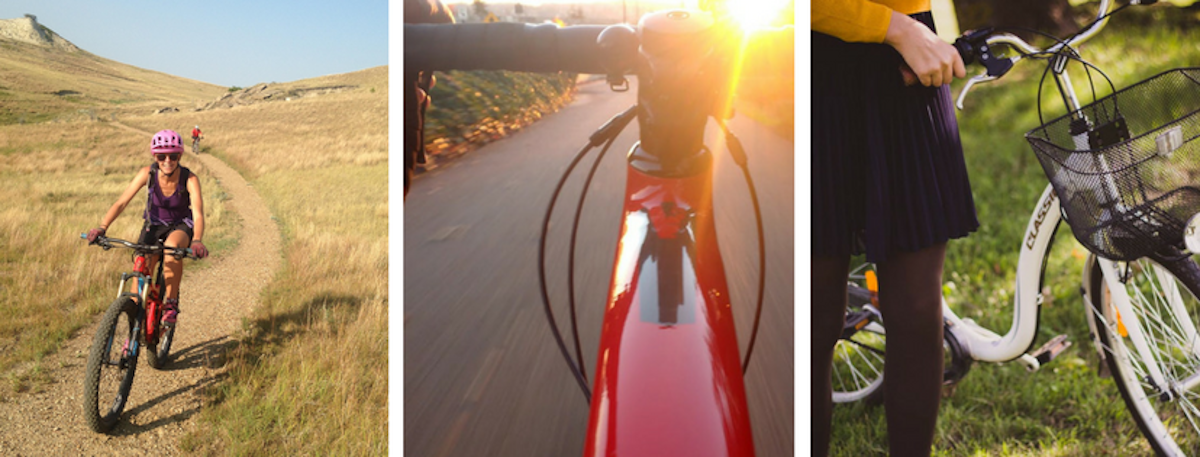


Kristen • Women's Cycling Coach • Tips & Tricks
⚡Sharing the bicycle stoke
🎙️Femme Cyclist Podcast & Blog
👍 Let's help ya have more fun on the bike!
⚡Sharing the bicycle stoke
🎙️Femme Cyclist Podcast & Blog
👍 Let's help ya have more fun on the bike!
- 2 pessoas curtiram isso
- 130 Publicações
- 2 fotos
- 0 Vídeos
- 0 Anterior
- Blogs & Reviews
- Femme Cyclist

 English
 Arabic
 French
 Spanish
 Deutsch
 Turkish
 Dutch
Dutch
 Italiano
 Russian
 Romaian
 Portuguese (Brazil)
 Greek
Greek
Atualizações Recentes
- WWW.FEMMECYCLIST.COMBicycle Geometry ExplainedHave you ever watched a bike review where some dude bro is talking about the slack headtube angle and the long wheelbase, andyou just have no idea what theyre even talking about?!The good news is that its not that complicated, it just sounds intimidating.In this article (and video), Im going to walk you through exactly what all the different bike geometry terms mean, in plain English, so that you walk away feeling informed and also so that you can put that knowledge to use next time youre shopping for a new bike.You may also want to read my article on the parts of a bicycle if there are any other terms in this article that youre not familiar with. Two Buckets: Fit vs HandlingIf youve ever pulled up a bike product page, you may have noticed a geometry chart. Every number on there falls into one of two buckets.Bucket one has to do with fit: how big or small the bike is and how upright or stretched out you would be on it. Bucket two is a bit more confusing and has do withhandling: how the bike behaves once youre moving. Is it quick and flickable, or stable and relaxed?Reach And Stack (Fit)Starting with the fit bucket, we have reach and stack.Reach is the horizontal distance from the bottom bracket up to the top of the head tube. Stack is the vertical distance for that same measurement. These two numbers will tell you a lot more about how a bike will fit you than a generic S, M, or L sticker ever will.Two medium bikes from two different brands can have wildly different reach and stack numbers. The bigger the reach and stack numbers are, the bigger the frame is.If youre not sure what the appropriate reach and stack is for your body, the best way to get those numbers is getting a professional bike fit BEFORE you buy a new bike. Another option is to use an online bike fit calculator although theyre not quite as accurate. If you have an existing bike that fits you well you can also compare its numbers to the new bike or bikes youre considering.Seat Tube Angle (Fit)The seat tube angle is the angle of the tube your seatpost slides into relative to the ground. A steeper seat tube angle (aka a bigger number) puts you in a more powerful, over-the-pedals position while a slacker (smaller) angle puts you further behind the pedals, in a more relaxed position. While this is primarily a fit number, seat tube angle can also affect how a bike climbs. A steeper seat tube angle can help keep weight centered or forward on steep inclines.Standover Height (Fit)The final fit geo number you really want to pay attention to is standover height. This is simply how high the top tube is off the ground when youre standing over the bike. You want to be able to comfortably stand over the bike with both feet flat with some breathing room, so compare this number to your inseam length.Head Tube Angle(Handling)Moving on to the handling bucket, lets look at the head tube angle. This the angle of the tube the fork sits in. The bigger the number, the steeper it is. Roughly 7374 degrees counts as steep, and youll see that on race road bikes. It makes the steering quick and responsive, but its a little twitchier. Around 6972 degrees is more moderate, common on gravel and cross-country mountain bikes. And down around 6366 degrees is slack. Thats trail and enduro mountain bike territory, where the steering gets slower and way more stable, especially at speed or on rough terrain.Keep in mind that steep and slack are relative to the category of bike. A 68-degree head angle would be slack for a road bike, but itd actually be steep for a downhill bike. This number is most useful when comparing two bikes to one another.Wheelbase (Handling)Wheelbase is the distance between the front and rear axles. A longer wheelbase gives you more stability, especially at speed. Thats why you see long wheelbases on descent-focused mountain bikes. A shorter wheelbase makes a bike feel more nimble and easier to maneuver in tight corners.Chainstay Length (Handling)Chainstay length is the distance from the bottom bracket back to the rear axle. Shorter chainstays make a bike feel snappier, quicker to accelerate, and easier to pop over obstacles. It will make a bike feel more playful. Longer chainstays add stability and can improve traction on climbs. This one matters a lot on mountain and gravel bikes especially.Bottom Bracket Drop/Height (Handling)Bottom bracket height tells you how far your bottom bracket is above the ground, while bottom bracket drop tells you how far the bottom bracket sits below the axles. A lower bottom bracket brings your center of gravity down, which makes cornering feel more confident and stable. A higher bottom bracket gives you more ground clearance, so you dont clip pedals on rocks, roots, or curbs. Other Geo NumbersThose are the most important terms and numbers to know, but here are a couple others you might hear as well. Again, Ive split them between fit and handling.FitTop Tube Length (effective) The horizontal length of the top tube. This is an older-school sizing number that reach and stack have largely replaced, but youll still commonly listed see it listed on geometry charts.Seat Tube Length The length of the seat tube. Alongside standover height, it tells you how tall a rider can comfortably fit on the bike.Stack-to-Reach Ratio Stack divided by reach. You can use this number to quickly compare how aggressive or relaxed a bikes fit is, independent of frame size.HandlingFork Offset (Rake) How far forward the front axle sits from an imaginary straight line drawn through the head tube down to the ground (the steering axis).Trail The distance between where the front tire contacts the ground and where the steering axis would hit the ground. This determines how planted or flickable the steering feels.Front-Center The distance from the bottom bracket to the front axle. It affects how your weight is distributed between the wheels, especially on smaller frames.Effective Seat Tube Angle On bikes with a bent or curved seat tube (common on modern mountain bikes), this is the angle measured at a riders typical saddle height rather than the actual tube angle, since the two can differ significantly.How Geometry Changes by Bike TypeNow lets talk about all those numbers and how they shift depending on what kind of bike youre looking at.Race road bikes have steep angles, low stack, and a short wheelbase. They are built to be fast and aggressive, but less forgiving over a long day.Endurance road bikes relax those same angles and raise the stack, trading a little speed for a lot more all-day comfort.Mountain bikes slacken the head tube angle, stretch out the wheelbase, and drop the bottom bracket, all in the name of stability when things get rough. Cross-country bikes keep things a bit quicker and tighter, while trail and enduro bikes go slacker and longer for confidence on steep descents.Gravel bikes sit right in between road and mountain. They have a longer wheelbase than a road bike, so you stay stable over washboard and loose gravel, but still efficient enough to hold a good pace.And commuter or hybrid bikes lean all the way into upright fit geometry and a longer wheelbase, prioritizing comfort and predictability over outright speed.How to Use This Info When Buying a BikeSo how do you actually use all of this the next time youre shopping for a bike?First, Id recommend finding the geometry chart. Every manufacturer publishes one right on the bikes product page, usually below the component specs.Second, dont just trust the size label. Line up reach, stack, and standover across a couple of sizes, and even across a couple of brands, so that youre comparing actual numbers instead of guessing based on S, M, or L tag. The best way to really nail in what numbers youre looking for is with a professional bike fit.Third, decide what matters for how you ride. Are you looking for a bike that prioritizes comfort, stability, or responsiveness? Then pick a bike with the geo specs that best line up with your priorities.More Articles You Might LikeParts Of A Bicycle 101: Diagram & GuideTypes of Bikes & How to ChooseYour Guide To Bike MaintenanceAbout The AuthorKristen Bonkoski is a USA cycling and NICA coach, bike educator, and founder of Femme Cyclist.Shes also the host of the Femme Cyclist podcast and runsRascal Rides, a website about biking with kids.Shes been riding bikes for more than two decades and is passionate about empowering women on the bike.IG:@femme_cyclistJoin Kristens Weekly Newsletter!The post Bicycle Geometry Explained appeared first on Femme Cyclist.0 Comentários 0 Compartilhamentos 332 VisualizaçõesFaça Login para curtir, compartilhar e comentar!
- WWW.FEMMECYCLIST.COMHow To Replace A Bicycle ChainYour bicycle chain needs to be replaced (its stretched, cracked, or rusted) and youre wondering if you need to take your bike to the shop. You dont.Replacing a bike chain is straightforward, and you only need two tools plus the new chain.For years, I took my bike to the shop for all drivetrain work, but once I started doing it myself and realized just how doable it is, I started teaching others how to do it too. The more you know about your bike and how it works, the more empowered youll feel. In this article, Ill cover when to replace your chain, what tools you need, how to pick the right chain, and the step-by-step.Watch The VideoVisual learner? Watch this video instead.When Should You Replace Your Bike Chain?There are several reasons you might need to replace your chain.The most common is that you measured your chain for wear (aka stretch), and discovered that it is time to put on a new one. If you dont know to do this, read my article on how to check your bike chain for wear. When you replace your chain as soon as it starts to stretch (wear), you prolong the life of the rest of your drivetrain. If you wait too long, youll wear down other drivetrain parts (like your cassette, chain ring, and derraileur pulley wheels) which can be very expensive. The next reason is chain failure of some sort. Sometimes, this means that your chain actually broke and fell off the bike while riding. (Hopefully, you had a tool and masterlink and were able to repair it long enough to get yourself home). It could also mean that you were cleaning your bike and noticed cracked or bent links. In all these cases, its time for a new chain.Finally, if a chain has been neglected for a long time and has heavy rust, it also needs to be replaced. What Youll NeedChain pliers /master link pliers* (I really love the Wolf Tooth Pack Pliers which are small enough for my on-bike tool roll as well as at home repairs).Chain breaker tool *A new chain (see the next section)How To Choose The Right Replacement ChainTo choose the correct replacement chain for your bike, youll want to determine the speed count of your existing drivetrain. If you dont know your speed count, count the number of cogs (rings) on your rear cassette. For instance, if you have 12 rings on your rear cassette, youll want a 12-speed chain. If you have 10 rings on your rear cassette, youll need a 10-speed chain.You also want to make sure to match the brand to your rear derailleur, or make sure its listed as compatible with that rear derailleur. If you watch the above video, youll see I had a SRAM GX derailleur with a 12-speed cassette, so I bought a SRAM GX 12-speed chain. Step 1: Remove The Old ChainBefore we can put on your new chain, we have to remove the old one.To do this, youll want to locate the master link. Its the one link that looks a little different from all the others. Sometimes its a different color, sometimes not, but in all cases, it will have a little slot next to one of the pins. That little space is what allows us to disengage the master link and release the chain.Position your chain pliers on either side of the master link and squeeze inward to release.Before you pull the chain off the bike, you may want to snap a photo. I like to take a picture of how the chain routes through the rear derailleur pulleys in case I have any questions later. (This is a good habit for all bike maintenance work in the beginning as you start to learn). Step 2: Determine The Correct Length For Your New ChainWhen you pull your new chain out of the box it will be longer than you actually need it to be.Well use the old chain to inform how long our new chain to be. That said, you cant just match the two by length because the old chain has stretched over time.Instead, you need to match the NUMBER of length on the new chain to the number of lengths on the old chain. There are two ways you can do this.Method A: You can manually count the outer links on the old chain, and then count out the same number of outer links on the new one.Method B (easier): Lay the two chains side by side, matching one outer link on the old chain to one outer link on the new chain.In either case, make sure you start with the master link on each chain and count it as one outer link.Once youve matched the number of outer links, go to the next outer link on the new chain and mark the first pin with a sharpie. Thats where youre going to break the chain. Step 3: Break The New Chain To LengthGrab your chain breaker tool and place the marked link in the chain breaker with the first pin lined up with the pin on the tool. Screw the tool in until you hear and feel the chain break. (It will take muscle and might feel a little scary. Keep going, you can do it!).Once it breaks, keep screwing until you push the pin all of the way out.Then, back the tool out and remove the extra links. Your chain is now the correct size. Go ahead and place the second half of your new master link into the new hole where you just pushed out the pin.Step 4: Route The New ChainRoute the chain onto the bike making sure that it matches your photo. It will go over the front chain ring, onto the rear cassette, then through the derailleur (under the top pulley wheel, over the bottom pulley wheel).Step 5: Connect The Master LinkOnce you have the chain over the front chain ring and thru the derailleur, bring two ends together at the bottom run of chain and join the master link. If your masterlink has an arrow, make sure its pointing in the direction the chain will move. When the masterlink is at the bottom of the chain, that means the arrow will be pointing backward toward the rear derraileur. Make sure you get both pins thru the little slots on the front and back of the masterlink (squeeze them together), and then give the chain a little pull to help it engage. Put the chain pliers on either side of the master link, and this time pull them apart to pop the link fully into place. If you struggle to get it fully engaged, go give it a couple hard pedal strokes which will usually do the job for you. Troubleshooting: My Chain Is Skipping After Replacing ItIf, on your first ride after replacing your chain, your chain is skipping, it means that other drivetrain parts are worn and need replacing as well.Start with the cassette, but make sure to check your front chain ring(s) and derailleur pulley wheels as well. Other Articles You Might Find HelpfulYour Guide To Bike MaintenanceHow to Clean and Lube Your Bike Chain (Its Easy!)How To Refresh Tubeless Tire SealantAbout The AuthorKristen Bonkoski is a USA cycling and NICA coach, bike educator, and founder of Femme Cyclist.Shes also the host of the Femme Cyclist podcast and runsRascal Rides, a website about biking with kids.Shes been riding bikes for more than two decades and is passionate about empowering women on the bike.IG:@femme_cyclistJoin Kristens Weekly Newsletter!The post How To Replace A Bicycle Chain appeared first on Femme Cyclist.0 Comentários 0 Compartilhamentos 512 Visualizações
- WWW.FEMMECYCLIST.COMPOC Tectal Mountain Bike Helmet Review: Why Its My FAVORITE HelmetWhen you are riding down the trail you have a lot to think about: which line to take, when to shift down, where youre going to stop for a milkshake after this epic ride is over. You dont want your helmet taking up any of your precious brain power, but you do want it to protect your noggin. This is why I like the POC Tectal the lightweight construction has plenty of ventilation to keep my head cool, the straps are comfortable, and there are no weird pressure points. Added bonus: the built-in adjustable visor helps keep the sun out of my eyes, so theres another thing I dont have to worry about.After two decades of mountain biking, the POC Tectal is the only helmet Ive ever purchased more than once. I have two: one in white and one in pink, and my husband rocks the Tectal as well.Review in a NutshellPros:Full coverageComfortable, easily adjustable strapsNo pressure pointsIncludes Recco reflectorAdjustable visorFun colorsMIPS and non-MIPS versionsCons:Larger profileHard to wear with a pony-tailVisor screw falls out easilyPrice: $220 (MIPS version) / $170 (non-MIPS)Buy at POC.comBuy at Amazon.comPOC Tectal Video ReviewFitUsually when I try a new helmet on in the bike shop, it feels great. I go ride for an hour or two, and it still feels great. But then, at hour 3 or 4 (or 24) it suddenly starts to hurt somewhere, slightly annoying at first until finally it hurts enough to take an ibuprofen. With the POC Tectal, Ive never had any pressure point issues. And based on comments from other friends, riders, and fellow reviewers, it seems that other people would agree.Same goes for the straps. I might be challenged, but I often struggleto get straps positioned correctly around my ears, so that either I look like a total dork or they are rubbing my earsjust enough to drive me crazy. The straps on the POC Tectal, thankfully,have a marvelous no-adjustment-required splitter around the ears that keep things looking tidy and feeling comfortable. All helmets should have this design for their straps.The helmet loosens or tightens via a fit dial at the rear. It is easy to operate, even one-handed and with gloves on, should you choose to adjust it while cruising down the trail.The one issue I do have with the Tectal that I havent seen in any of the male-written reviews out there is the pony-tail problem. Because of the deep-coverage that the Tectal provides, there isnt any room for a ponytail. I end up having to do a low pony or braid which I dont love because of the heat/sweat factor, but it is a worthwhile trade-off for the comfort and safety of the Tectal.AestheticsWhether or not you like the looks of the POC Tectal is largely a matter of personal preference. The profile is larger than other helmets, so if you like a slimmershell, pass on by. Personally I think the Tectal looks rad it has a hard-core enduro look that will make you look pro even if youre just cruising down the blue runs at the bike park.The other thing I like about POC helmets is the wide variety of colors that they come in. Dont offer your favorite color? Wait a month and they probably will.They seem to switch up the colors quite frequently.I also found that the color on the Tectal stays true. Even after a couple years of use, this helmet has stayed colorfast. Unfortunately, I cant say the same for my pink POC Trabec.VisorAs you would expect in this price range, the POC Tectal has an adjustable visor. (Unfortunately the screw has a tendency of falling out, which Ive had happen several times). That said, even when missing said screw, the visor works well raising up if you choose to wear goggles, andlowering for times of full-sun. POC also offers a replacement screw kit for $5 so youre not totally out of luck.SafetySo the POC Tectal is comfortable, it shades your eyes, and it looks good but what about safety? After all thats what a helmet is supposed to be about, right? Fortunately, the Tectal will do a good job in saving your noggin in the event of a crash. The PC outer shell and EPS liner meet all of those standard certs: EN 1078, CPSC 12.03, AS/NZ 2063:2008.The really cool part of the Tectal is the built-in Recco reflector. In the unfortunateevent that you should become lost or hurt, the Recco reflector bounces a directional signal that can be located by rescuers carrying a Recco detector. Of course, it is unlikely that you will ever need it, but if you often ride solo or venture out in the backcountry, the Recco reflector is a good insurance policy.The one surprising safety miss on the regular POC Tectal is MIPS. At this pricepoint and technology-level, you would expect the Tectal to come with MIPS, but it doesnt. Fortunately, the helmet is also offered as the POC Tectal Race MIPS which does offer the technology. Bottom LineThe POC Tectal is my helmet of choice. Even after trying several other mountain bike helmets, I keep coming back to the Tectal primarily due to its extreme comfort. Now that it comes in a MIPS version, Ill switch to that, but I cant think of any other good reason to venture much further than that. Compare to Other Great Mountain Bike HelmetsNot sure if the POC Tectal is right for you? Weve created a list of our favorite mountain bike helmets. See our other recommendations and see how the POC Tectal stacks up against them: Best Mountain Bike Helmets for WomenAbout The ReviewerKristen Bonkoski is a USA cycling and NICA coach, bike educator, and founder of Femme Cyclist.Shes also the host of the Femme Cyclist podcast and runsRascal Rides, a website about biking with kids.Shes been riding bikes for more than two decades and is passionate about empowering women on the bike.IG:@femme_cyclistJoin Kristens Weekly Newsletter!The post POC Tectal Mountain Bike Helmet Review: Why Its My FAVORITE Helmet appeared first on Femme Cyclist.0 Comentários 0 Compartilhamentos 513 Visualizações
- WWW.FEMMECYCLIST.COMBest Mountain Bikes For Women Under $1,000So you want to start mountain biking but dont want to spend a ton of money to get your first bike. We get it. Thats why weve rounded up a list of the best entry-level womens mountain bikes under $1,000 (or right at). These bikes will help you get into the sport, and wont break the bank. You can always upgrade later if you find out you really love mountain biking.In addition to a list of our top sub-$1,000 mountain bikes for ladies, weve also included a list of tips on buying yourfirst mountain bike and what you should look for. Dont understand the difference between hydraulic disc brakes and mechanical disc brakes?Thats ok. Keep reading and well break it all down for you.Our Top PicksBikePriceWhat We Like1 Liv Tempt 1 $1,000A brand just for women!2Cannondale Trail 1$999Includes a dropper post3Specialized Rockhopper Sport$849Local bike shop support4Trek Marlin 6 Gen 3$999Good quality suspension fork5Polygon Xtrada$799Can usually get on saleLiv Tempt 1Price: $1,000Buy at Liv-Cycling.comLiv Cycling makes some of the best womens specific bicycles out there, and some of the best budget bikes, period. The Liv Tempt 1 is the lightest bike on our list, which pushes it into our top spot.We appreciate that it comes in an XS frame to fit women as small as 411, and it has a female-specific saddle. While it doesnt come with a dropper post, it does have internal cable routing to add one later on. The bike offers Tektro hydraulic disc brakes and 80mm or 100mm of travel (depending on the size) thanks to the Giant air fork. All the components on the bike are brand-name, and everything is durable.Cannondale Trail 1Price: $999Buy at REI.comThe Cannondale Trail 1 proves that you dont have to spend a lot of money to get a nice bike.While its not a womens specific bike, it is offered in small frame sizes and those smaller bikes have size-appropriate wheels. Designed thoughtfully for smaller riders, the extra-small frame accommodates those as petite as 46. Cannondale doesnt cut corners with cheaper, off-brand components on this model. Instead, theyve equipped the bike with entry-level but name-brand parts. The Trail 1 includes a Shimano CUES drivetrain and hydraulic disc brakes, ensuring reliable and smooth performance.It comes with a dropper post, which isnt standard on most bikes at this price point, and is one of the best inventions in mountain biking. Believe me, you want one! However, the bikes weight could be a sticking pointits a bit heavier than the Liv Tempt. This might be a concern if you frequently ride in hilly areas.Also, it features a 2x drivetrain, which includes two chainrings in the front, diverging from the modern trend of a single chainring setup that many prefer for its simplicity.Specialized Rockhopper SportPrice:$849Buy at Specialized.comThanks to the fact that Specialized is one of the biggest bike manufacturers in the world, they manage to produce high-quality bikes at a fraction of what other smaller brands can manage. The Specialized Rockhopper was actually my first mountain bike some 15 years ago, and that old bike still serves me well as a commuter bike.On the component front, the Rockhopper Sport boasts a dependable microShift drivetrain and Shimano hydraulic disc brakes, providing reliable shifting and excellent stopping power in all weather conditions. Like most of the bikes on this list, it has a dependable, though entry-level Suntour fork.The bike is offered in 27.5, and 29 wheel offerings, and it comes in XS to XXL frame sizes. Ive consistently had great luck fitting tiny riders on Specialized mountain bikes. While many bikes on this list are direct-to-consumer, Specialized allows you to order a bike online OR head to your local Specialized dealer. This offers the best of both worlds. Trek Marlin 6Price: $999Buy at TrekBikes.comTrek recently got rid of the womens version of this bike (sad!), but the Marlin 6 is still worthy of your consideration. Like Specialized, Trek is one of the biggest bike brands around which means you get nicer components for a lower price, and its easy to get local bike shop support if you need it. Trek bikes have a great warranty, and I know from personal experience that they take good care of you.While this bike just barely scrapes in at under $1,000, the little bit of extra dough is worth it. The bike comes with a RockShox Judy fork which is a definite step up from the Suntrour fork included many of the other bikes listed here.Also, the Marlin is one of the better fit options for small ladies. The XS frame size fits riders as small as 49.Like many other bikes on this list, the biggest drawback is that its heavy. If you can afford to spend more for one of the next levels of the Marlin, you might want to consider it.Polygon Xtrada 5Price: $799Buy at BikesOnline.comThe Polygon Xtrada is a direct-to-consumer budget mountain bike. This is a great bike to get started on.Despite its hefty weight, its a pretty decent climber. I felt fast on this bike when on flats or uphills.Like other bikes on this list, the Suntour fork definitely felt a bit stiff on the descents. For mellow beginner trails, it will feel fine, but once you start to progress, the fork will be a limiter. My biggest complaints is that there is no routing for a dropper post should you choose to add one later on, and the base level Xtrada 5 has a 2x rather than 1x drivetrain. Youll have to upgrade to the Xtrada 6 or 7 for a 1x. Review: Polygon XtradaWhat to Look For In An Entry-Level Mountain BikeFeel a little intimidated by all the bike-lingo? No worries. Heres what you should look for when picking your mountain bike.Womens Specific Mountain Bikes vs Unisex BikesA few years ago, every mountain bike brand on the market was coming out with womens-specific offerings. Now the pendulum has swung the other way and many brands have removed their womens mountain bikes.This isnt necessarily a bad thing. Marketing bikes as womens bikes often relegated women to a specific corner inside the sport. And whos to say smaller men and teen boys dont benefit from smaller frame sizes too?On the flip side, womens-specific mountain bikes are sometimes a blessing for smaller women who dont fit on traditionally-sized bikes, and for ladies looking for bikes in more feminine designs and colors. Generally, they also come with components that fit a larger range of women betterlower standover height, narrower handlebars, shorter cranks, and perhaps most important of all: womens-specific bike saddles (seats).On this list youll see a mix of womens-specific bikes as well as unisex bikes. These are bikes that are offered in smaller sizes and will work well for women regardless of their gender designation.The bottom-line is that you dont feel like youre limited a womens bike. If you find a mountain bike that meets all the other criteria well mention below and that is in your price range, go for it.SuspensionFor a sub-$1,000 bike, expect to buy a bike with front suspension only. Bikes with full-suspension will be more expensive or of inferior quality. But thats okay. A hardtail bike is a good place to start.All the bikes on this list have a pretty similar suspension fork. TheSR Suntour fork can be found on most bikes in this price-point and its a pretty decent little fork. It ranges between 100mm and 110 mm of travel, which isnt a ton, but its enough to get started.It is a lot stiffer than a higher quality fork, and you may feel like you get shaken around a bit. A good fork is the biggest reason to spend more money on a mountain bike. (Well talk more about this later). But if youre sticking to easy, mellow trails, the Suntour fork will do okay for you. Wheels and TiresMountain bikes come with several different wheel sizes 26, 27.5, and 29. Which size is best is largely a personal preference. Youll notice that fewer and fewer bikes are being offered with 26 wheels (it used to be the norm). Bigger wheels roll easier over obstacles, but also take a little longer to get up to speed and to maneuver in corners. For this reason, our personal favorite wheel size is 27.5.Tires come in a wide variety of sizes too. Of course, youll need tires that match your wheel size (26, 27.5 or 29), but there are also variation in widths. Again, this is largely a personal preference. A 2.0 tire is super narrow, and a 2.8 tire is beefy. In general, the more rocky and technical the terrain you are riding, the wider the tire youll want. If youre sticking to gravel paths, a narrower tire will roll faster.Finally, some wheels and tires are tubeless or tubeless-ready. This means that they can be ridden without tubes like traditional bike tires. Most bikes in this price range are not tubeless-ready, but a few are, and wed highly recommend it. Since switching to tubeless tires, Ive cut down on the number of flats I get by like 2,000%.DrivetrainThe drivetrain of the bike is everything that works together to propel the bike forward and to shift between gears. This includes the front and rear derailleur, the cassette, the front chainring(s), the shifters, shifter cables and chain.Between the bikes on our list, there isnt a ton of differentiation. The biggest difference youll notice is the inclusion or lack of a front derailleur.Over the last few years, higher end bikes have all but dropped a front derailleur. This trend is now trickling down to entry-level bikes as well.Youll notice that the bikes on our list either have a 1x (one-by) drivetrain or a 2x(two-by) drivetrain. On a 1x drivetrain, there is only one gear up front and no front derailleur. On a 2x drivetrain, there are two gears up front and a front derailleur to move between the two gears.Id highly enourage you to look for a bike with a 1x drivetrain. Beginners often have a lot of trouble with shifting, and this keeps things simple.In terms of brands, at this price point, expect a mixed-bag of component groups from a reputable brand-name company such as Shimano or SRAM. The nicest bikes on this list have a Shimano Deore drivetrain.BrakesModern mountain bikes come with disc brakes. This is different than mountain bikes of yesteryear that had rim brakes. Disc brakes offer significantly better-stopping power than rim-style brakes.Youll notice there are two different types of disc brakes: mechanical disc brakes and hydraulic disc brakes. Mechanical disc brakes are the cheaper and easier to maintain of the two. Hydraulic disc brakes, on the other hand, offer better modulation and performance but add additional cost and maintenance.In general, wed recommend choosing a mountain bike with hydraulic disc brakes. Just a few years ago, nearly all entry level mountain bikes had mechanical disc brakes, but today there are cheaper, reliable hydraulic disc brakes available.Youll notice that the majority of bikes on our list have Tektro hydraulic disc brakes. They are simple and work well, though lack the stopping power of the brakes youll find on more expensive mountain bikes. WeightUnfortunately, what these bikes save in price, they make up for in weight. Meaning that compared to more expensive mountain bikes, the rides on this list are HEAVY. This will be more noticeable if you live in an area with mountainous terrain (like Colorado), as opposed to an area with mostly flat trails (like Florida). Its also a reason to be kind to yourself if you are struggling to keep up with friends on hillsa heavy bike is slower. Once youve decided that mountain biking is your jam, youll probably want to invest in a lighter bike. Until then, have fun, be kind to yourself, and pick the lightest bike you can find in your budget.When You Should Consider Spending MoreIf youre just starting out mountain biking, getting a budget bike to start out might make sense. You dont know yet if this is sport you want to invest big dollars into.That said, if you already sold on mountain biking, and know that youre excited and ready to progress, you should consider spending a little bit more. There are plenty of hardtail mountain bikes in the $2k-$3k range that will grow with you longer than these will. They will offer features like a more comfortable suspension fork, a dropper post, tubeless wheelset, thru-axles, and more. With a little shopping, youll also find some options that arent as heavy as the hardtails on this list.An example of a little higher end hardtail that will get you further is the Specialized Fuse. More Resources to Help Get You Started In The SportWomens Bike Sizing GuideWhat To Wear Mountain Biking: Everything You Need To Know!Best Womens Mountain Bike Clinics, Camps, & EventsAbout The AuthorKristen Bonkoski is a USA cycling and NICA coach, bike educator, and founder of Femme Cyclist.Shes also the host of the Femme Cyclist podcast and runsRascal Rides, a website about biking with kids.Shes been riding bikes for more than two decades and is passionate about empowering women on the bike.IG:@femme_cyclistJoin Kristens Weekly Newsletter!The post Best Mountain Bikes For Women Under $1,000 appeared first on Femme Cyclist.0 Comentários 0 Compartilhamentos 513 Visualizações
- WWW.FEMMECYCLIST.COMGarmin Varia Radar RTL515 Tail Light ReviewWhen we consider cycling safety there are our obvious, go-to considerations.Helmet? Check! Headlights and tail lights? Check! Visible clothing? Check!Frequent use of hand signals? Check, check, check!There are so many obvious ones, but what about the safety measures that arent as well-known, or as obvious?What about bike radar? If you are thinking, Ummmmwhat on the earth is THIS? Do I really need it? then read on!The Garmin Varia Radar is a bluetooth device that lets you know when cars are coming up behind you. Additionally, the RTL515 version has a tail light that makes it easier for those cars to see you.Many cyclists think that having bike radar is akin to having a bike computer. Its a nice addition, but probably not 100% necessary.Honestly, I used to feel this way too. I originally purchased the Varia mostly because I wanted a really solid tail light.You see, I have spent a great deal of money on tail lights over the years. I am not sure if the problem is with me, or with the lights I keep buying, but I always have a hard time finding one that holds a charge.I decided to go out and get myself the tail light to end all tail lights.Since I heard there was a version of the Garmin Varia with an excellent tail light built right in, I decided to give it a go.The price was steep, but as I cycle more and more I find myself seeking out fancier gear and higher priced equipment.Ultimately, when it comes to safety, I find that this is where my money is really well spent. All the faster gearing and fancy carbon in the world isnt going to do much for me if I am in a terrible accident.Wondering if the Garmin Varia Radar Tail Light is worth the cost? Looking to see if its right for you? Curious if it really increases safety on the bike?If so, read on for our detailed review of the Garmin Varia Radar RTL515 Tail Light!Review in a NutshellPros:It is one of the most innovative pieces of safety technology on the market right now.You can see traffic coming up behind you directly on your bike computer or smartphone.The Varia Radar Tail Light is very easy to pair with your bike computer.It is incredibly easy to mount on your bike and the directions to mount it are very easy to follow.It is compatible with most road bikes (In other words it will easily mount on and fit around most road bikes).The tail light is VERY bright and has different modes to suit your needs. It really helps with visibility.It has up to 16 hours of battery life. I have never had it die on a ride, even a longer one as long as its fully charged. I can usually get a couple rides out of one charge.It can be used with a smartphone/even some non-Garmin bike computers like Wahoo.It has a Peloton mode so that it makes the light a little less annoying to other cyclists while riding in a group.Cons:The price. This is by far the biggest con and what kept me from purchasing it for some time.The entire unit IS long and just fits under my saddle bag. I imagine taller riders wont have this problem, but I am short (52) and ride a small bike (47cm Trek Domane). Its possible anyone shorter than me or with a lower saddle height could have a problem.Others in your household (ahem, my husband) may like it so much that they borrow it frequently. Luckily he is a very responsible borrower who always charges it up when hes done!On some modes in very high traffic areas it can get annoying when there is a lot of traffic.Price: $199 ListBuy at Garmin.comBuy at Amazon.comVery Easy to Pair With Your Bike Computer or Smart PhoneTo say that I am technically a bit challenged is the understatement of the year. I always struggle with tech, and bike technology is no exception.I honestly had absolutely no problem what-so-ever charging the Varia Tail Light and synching it with my Wahoo bike computer. My bike computer immediately recognized the bluetooth device.All you have to do is make sure the device is on, go into settings/sensors, select the Varia, and add it. Every time I ride as long as the Varia is on it immediately pairs with my Wahoo. I can tell it is paired because a grey bar shows up on the side of the screen of my bike computer.I have never once had to initiate the pairing again. The bike computer just recognizes the Varia and I am ready to go!Though I have not tried pairing it with any other device, and I can only imagine that it pairs just as easily, if not easier with Garmin bike computers or with a smartphone.Simple Setup Right Out of the BoxI was able to very easily mount my Garmin Varia Radar Tail Light right onto the back of my bike. It comes with a few different sized mounts to fit different bike seat posts.I quickly selected an inner mount that bit my bike post, and then simply stretched the included band around the post to secure it to my bike. Honestly, I am not great at attaching things to my bike (kind of like I am not great with tech) so if I say this is easy? It truly is easy.Once you have the Garmin Varia Radar Tail Light turned on, you are done. This device does all the rest.A grey bar is now visible on the left side of the screen. As a car comes up your bike computer will beep to alert you (it even has a more urgent beep pattern if the car is coming fast).The grey bar on the left is where the car icon will appear when a car is behind you. You will then be able to see a little car moving up the grey bar to indicate how close the car is to you.As the car drives by you, it disappears from the display. Thats truly all there is to it! And all the while the light is on to alert drivers to your presence.The Varia Radar Tail Light is Compatible With Smartphones, Garmin, and Wahoo Bike ComputersThe first thing that I researched with the Varia was whether or not it would work with my Wahoo bike computer. As much as I wanted the safety technology, I was not about to sacrifice my love for my Wahoo ELEMNT, nor shell out the money for a Garmin bike computer.I was thrilled to find that it was not only compatible with the Wahoo but also with smartphones. It is even compatible with the RideWithGPS app!With all of the different software pairing options, the Garmin Varia Radar Tail Light makes it easy to use with your favorite smartphone app or bike computer.Great to Use as ONE of Many Pieces of Safety Equipmentit is NOT a Substitute for Being Aware of Your SurroundingsI cannot stress enough that as awesome as it is to see cars coming up behind you, this is just one of many safety features and precautions that you must take on the road.One can see how it would be VERY tempting to assume there is no one behind you if the radar doesnt indicate anything, but you cannot rely on this alone.Always be sure to look over your shoulder in addition to checking your radar.Additionally, I would like to note that I can almost always hear a car before it shows up on my radar, which means that using our senses continues to be really important.I have a friend who loves the idea of the Varia because she is single-sided deaf, but I also know that she would also be sure to look over her shoulder before pulling out into traffic as well.It Really IS ExpensiveIt is hard to get past the price tag of this technology. Yes, its true, it is radar, it is pretty accurate, and thats amazing, but its still about $200.You can get the radar itself without the tail light for around $150, but that is still pretty pricey, AND you are going to have to find a way to mount the tail light in addition to the Varia. At the end of the day I do really feel it is worth it, but I understand that the price tag may put it out of the range of possibility and acceptability for many cyclists.Bottom LineEven though I spent a good deal of money on this product, I have never once regretted the purchase.There is something to be said for a high-end safety feature that does exactly what it says, and does it with ease.I have personally not had the same luck with Garmin bike computers, and have found them to be rather cumbersome, so the fact that the Varia is just SO easy to set up is just one of the many reasons I highly recommend this product.As someone with an old neck injury from a car accident that makes it hard for me to turn my head easily to the left, I must say that having the added safety of the Garmin Varia Radar Tail Light makes me feel so much better about pulling out into traffic.Other Stuff You Might LikeTips For Biking At NightTips For Solo CyclingBest Bike Lights To Keep You Safe In The DarkAbout The ReviewerStacy Ann Smith is a New England-based cyclist who strives to stay upright on her bike. She is the founder of Sascy Cycling, and her mission is to encourage women to love their body and focus on what it can do, not what it looks like. When Stacys not cycling she is teaching high school history and eating pizza with her husband and son. For awesome womens cycling tips and to learn more about Stacy, visit Sascy Cycling atwww.sascy.com.The post Garmin Varia Radar RTL515 Tail Light Review appeared first on Femme Cyclist.0 Comentários 0 Compartilhamentos 505 Visualizações
- WWW.FEMMECYCLIST.COMHow to Heal (and Prevent) Cycling Saddle SoresYouve been ramping up your miles, training for a big event, or logging some epic rides. But now youre avoiding getting back in the saddle because youre in pain. Its not your quads that are screaming, or a dehydration headache, its a painful little saddle sore on your bum.Saddle sores (and other issues down there) are common among femalecyclists, and yet are seldom talked about. Well, Im here to talk about them! For the first decade that I rode bikes, I suffered pretty much constantly from saddle sores. (Yes, I suffered for TEN YEARS). Back then, there wasnt much information and I didnt realize that I didnt have to suffer.Finally, with time and lots of experimentation, I finally figured out how to deal with them. In this article, Ill share some tips on healing saddle sores, but more importantly, how to avoid getting them in the first place.But First, What Is A Saddle Sore And What Causes Them?A saddle sore is a (you guessed it) a small sore on your bum, crotch, or the insides of your thighs. Its usually raised and red, pink, or purple. It looks a bit like a pimple, and may or may not have a head.Saddle sores are caused by friction, pressure, and bacteria. In other words, some combination of your saddle and chamois are causing you major irritation. Its important to note that many women suffer from chafing on their bum or crotch. While this is an equally awful issue, its not what were talking about here. (Although much of the advice here can help with chafing as well).How To Prevent Saddle SoresHeres what you can do to keep saddle sores from forming in the first place.Change Out Of Your Shorts ASAPAs soon as your ride is done, even before youve popped that post-ride brew in the parking lot, take off your bike shorts and put on something dry. The moisture helps breed saddle sores as well as other nasty bacteria that can cause yeast infections. If its going to be a while before you can take a shower, wipe down with a couple of baby wipes as well.Try A New Saddle (Or Change Its Position)If you are getting persistent saddle sores, your saddle is the most likely culprit. Try a new saddleone thats the appropriate width for your sit bones and isnt too hard or too soft. For more help, read my article on picking a good saddle and measuring your sitbones.We see a lot of women who opt for one of those big padded saddles. While this might help initially with bruising, it can actually make matters worse. A saddle that is overly padded is one of the biggest culprits when it comes to saddle sores. If you ride A LOT and are putting in multiple big days in a row on the bike, you may also want to consider having two saddles you can swap between. This slight change to your pressure points and where the saddle makes contact can help relieve consistent chafing in the same spot. Finally, make sure that your saddle is positioned properly. If your saddle is too high, or tilted to far forward or backward, the angle could be causing the problem. In fact, when I measured pro bike fitter Natalie Collins, she said she sees more issues with incorrectly positioned saddles than with the wrong saddle. Experiment With Different ChamoisSimilarly, chronic saddle sores could be due to your chamois. If you are riding with a thick one, try a thinner chamois. Or vice versa. For really long rides and bikepacking, Ive actually quit wearing a chamois at all. I found I was better off without one than with one.Unfortunately, this requires a bit of trial and error since everybody is different, but dont be afraid to experiment! Here are some of our faves:Best Chamois for WomenBest Womens Bike ShortsMake Sure To Wash Your Shorts Between RidesThis may seem obvious, but if youre lazy about laundry (dont worry I am too), remember to wash your shorts between each ride. Otherwise, bacteria can build up in your shorts and cause infections, rashes, and yes, saddle sores.I like having as many pairs of shorts as I generally wear in a week. Yes, its expensive to do that, but Im never caught without a pair of clean shorts. Slather On The Chamois CreamChamois cream can help reduce the friction between your bum and the saddle. Use a peanut-size amount of cream, and make sure to target the areas where you are prone to saddle sores.Want to try some? Here are our favorite chamois creams for women.Healing Saddle SoresAlready have a saddle sore? Heres what to do next. Put On Some Calamine LotionOn the way home from your next ride, stop at Walgreens for a bottle of the pink stuff. Calamine lotion is always my go-to remedy for drying out saddle sores that just wont drain. Slather some on before bed, and chances are your sore will be doing significantly better in the morning.Take A BathDraw a hot bath and throw in cup of Epsom salts. Not only will the warm water and salt be good for your tired muscles, they will also help to heal your bottom side.Use A Warm CompressIf you have a saddle sore that seems like it needs to drain, try using a warm compress. Sleep In The BuffMake sure that you are giving your saddle sore plenty of air. This might mean chilling at home in the nude, or sleeping sans pajamas. Your significant other can thank us later.Take A Few Days Off The BikeAlthough its probably not what you want to hear, sometimes the best thing you can do for a saddle sore is to take a few days off of the bike. Use the time for recovery or for some cross-training like running or weights. If you absolutely cant afford the time of the bicycle, then swap out bikes or saddles so that the pressure points are different.Go To The DoctorIf you have a recurring sore, or it is getting infected, you might want to consider taking a trip to the doctor. You should always seek medical attention if the sore is accompanied by a fever, chills, or pus.More Help Keeping Your Bum Happy9 Best Womens Bike Saddles & How To Choose!Dont Wear Underwear With Bike Shorts & 5 Other Tips On How To Wear Bike Shorts9 Best Padded Bike Shorts (Cycling Shorts) For WomenAbout The AuthorKristen Bonkoski is a USA cycling and NICA coach, bike educator, and founder of Femme Cyclist.Shes also the host of the Femme Cyclist podcast and runsRascal Rides, a website about biking with kids.Shes been riding bikes for more than two decades and is passionate about empowering women on the bike.IG:@femme_cyclistJoin Kristens Weekly Newsletter!Are You Listening To The Femme Cyclist Podcast?!?A podcast for women who love bicycles! We we celebrate all forms of riding and all forms of women, so whether youre a road cyclist, mountain biker, or bike commuter, youll find your community here. Each week well week bring you interviews from inspiring women, and offer tips and tricks to help you thrive on the bike.The post How to Heal (and Prevent) Cycling Saddle Sores appeared first on Femme Cyclist.0 Comentários 0 Compartilhamentos 492 Visualizações
- WWW.FEMMECYCLIST.COMPearl Izumi Womens PRO Bib Short ReviewIf you are a cyclist, there is a good chance you have heard of Pearl Izumi.Pearl Izumi is a leader in the US cycling apparel industry. They are known for making high quality, long-lasting cycling apparel and gear. Honestly, it was the first cycling apparel company I was ever really even aware of. Pearl Izumi products are a staple in US bike shops nationwide.I remember when I wanted to get my first pair of cycling bibs I asked my husband, Chris, who had been cycling for some time, which brand to look at. He suggested Pearl Izumi, and said that he enjoyed every pair of Pearl Izumi bibs he has owned.Now, I knew that what works for guys might not necessarily work for me, but I definitely trust his judgement and ordered a pair.This was 3 YEARS AGO, and these suckers have held up. I am telling you, they are like the day I bought them, and I couldnt possibly recommend Pearl Izumi bib shorts more. I have since purchased more pairs, and have had amazing results with all of my Pearl Izumi bibs.So what, specifically, is it that makes these bib shorts so amazing? In a nutshell they are flattering, comfortable, and durable. Intrigued? Keep scrolling for my in-depth review of Pearl Izumi Bib Shorts.Review in a NutshellPros:Material is high quality, durable, and comfortable.True to size and come in a nice range of sizes (x-small to xx-large).Very few seams/places for irritation.Virtually no leg cuff, but legs stay solidly in place.Chamois is substantial for long rides.Crossover straps in the back offer a drop tail for nature breaks.Pearl Izumi has committed to making 90% of their line sustainable Pearl Izumi is a major, world-wide cycling company that originated in Japan more than 50 years ago, and has been distributing in the US since 1981.Cons:The chamois is substantial and may be too much for someit does feel more like a diaper than some other chamois I have tried.Currently is only available in limited colors, so those who like a flashier kit may be disappointed.Though you certainly can drop the back of these bibs for nature breaks, I find it to be a bit of a struggle.Clocking in at $250, the PRO bib short is on the pricey side, though Pearl Izumi does carry less expensive bib-shorts that are also of great quality depending on your needs.Price: $250Buy at PearlIzumi.comBuy at Amazon.comWhy You Should Try BibsIn the age-old debate amongst female cyclists regarding which is better, cycling shorts or bib shorts, I have found that the vast majority of road cyclists I have encountered prefer bib shorts.Bibs are, in a word, great. There is no waistband to roll down, everything is smooth and seamless, and they look awesome under cycling jerseys. Bib shorts have shoulder straps to hold them up so that you dont have to deal with the waistband of a short. It simply doesnt exist! The level of comfort, truly, can be second to none when you find the right pair of bib shorts.I dont think I have to tell you, though, that bibs for women have their own set of challenges because we are simply built differently, and therefore the perfect bib short must be built differently too!The straps need to either go alongside our chest, or they need to kind of meet/clip in the middle, for one. Oh and HIPS! We have HIPS!!! Theres nothing worse than trying to pull on a pair of bibs that seem to completely forget that we ladies are curvy, not straight. As a result, finding the right bib shorts can be a struggle for women.Enter Pearl Izumi Bib Shorts.Pearl Izumi Bib Shorts are Comfortable, Stay in Place, And Are True To SizeTime and time again I find myself reaching for these bib shorts. They are comfortable, and they stay in place. The straps have a convenient, optional clip so that you can clip them together in the middle of your chest if, like me, you dont find it terribly comfortable to have your straps on either side. Alternatively if you like the straps on the sides you can just leave them unclipped.The fabric is very soft, and there are very few seams. These are not compression shorts, and they do not squeeze. There is no cuff around the leg which I love, because it prevents my legs from feeling like sausages and putting unwanted pressure on my knees. There is a grippy material inside the bottom of the leg to keep it in place, and it actually works!Finally, Pearl Izumi Bibs tend to be true to size, and tend to be consistent across their different designs. This is extremely helpful when you are purchasing bib shorts online and cant try them on.Pearl Izumi Bib Shorts Are VERY DurableI have put these shorts to the TEST.The first pair I bought was three years ago, and I wear them all of the time because they are my favorite pair. I can honestly say that I have easily worn these bibs 100+ times, and they are honestly like the day that I bought them.My other pairs of Pearl Izumi bibs, though I admittedly use them less because these are my favorites, have held up just as well.The seams are all still intact, the color has not faded, and there are zero holes or rips in these shorts despite the fact that I have fallen in them quite a bit. The chamois has held up too, and I find that they protect my sit bones just like they did when they were new!Also, it should be noted that I was wearing these shorts when I suffered my worst fall in cycling. I fell hard on one side, and my leg was VERY bruised underneath these shorts. I was absolutely shocked that a) the shorts didnt rip or tear or show any sign of wear and that b) my road rash where I fell wasnt far worse.There is a Drop Tail Feature for Nature Breaks.but I am telling you it is a stretch to say this, and I mean that literally! Yes, you can technically keep your jersey on, and the criss-cross design of the back of these shorts means that you can stretch them down enoughbut its not easy.I was honestly a little afraid I wouldnt even quite be able to clear the bib shorts. That would have been embarrassing.Now, maybe I was doing it wrong, I am not totally ruling our user error here, but I have used other bib shorts with a drop tail design and havent exactly had this problem.So yes, it is possiblebut definitely proceed with caution and give em a good stretch!The Chamois of the Pearl Izumi Bib Short is ThickNow, depending on your preference, you may see this as a pro or a con. Sometimes if a chamois is too thick, or is not placed properly, it can honestly feel more like a diaper than a short.I will say that the chamois in this short does feel a bit droopy when I am walking around, and for that reason its not my favorite for shorter rides around the neighborhood. I also wouldnt necessarily wear these for a ride where I will potentially be off the bike for a bit, getting ice cream/stopping for breakfast. These arent the best for that.But, if you are planning to ride a distance you cannot go wrong with this short. When you are spending most of your time in the saddle and want to be able to actually walk after your ride? These will be your go-to bib shorts.Like Many Bib Shorts, and Most Cycling Gear in General, You Get What You Pay ForI own multiple pairs of Pearl Izumi Bib Shorts, and my favorites were the highest end shorts they had at the time, and therefore were also the most expensive. All three pairs that I own are solid, have great chamois, and are very comfortable, but you can just tell these are truly the top of the line, and are constructed with the best materials, and have the best design.As a result, unless you get these on sale or clearance, you will likely be paying around $250. They have other shorts (like the Pearl Izumi Attack Air bib) that are definitely cheaper, but there is a reason why I keep coming back to these.Bottom-LinePearl Izumi is a long-time trusted staple in the cycling industry, and for good reason. It is clear that a lot of research and development has gone into developing a solid cycling short for women, and they certainly had women in mind when they created these shorts.Though some larger cycling companies may make womens apparel as an afterthought, and just make smaller mens items and call them womens, it is clear that Pearl Izumi does not do this. Honestly, with all of the wonderful womens cycling brands out there now like Machines For Freedom and Terry, they really cannot afford to.If you are looking for a solid bib-short that will be comfortable, durable, and go the distance with a substantial chamois, you really cant go wrong with a pair of Pearl Izumi Bib Shorts.More Help Keeping Your Bottom ComfyBest Womens Bike ShortsBest Chamois Creams for WomenHow to Heal (and Prevent) Saddle SoresBest Womens Bike SaddlesAbout The ReviewerStacy Ann Smithis a New England-based cyclist who strives to stay upright on her bike. She is the founder of Sascy Cycling, and her mission is to encourage women to love their body and focus on what it can do, not what it looks like. When Stacys not cycling she is teaching high school history and eating pizza with her husband and son. For awesome womens cycling tips and to learn more about Stacy, visit Sascy Cycling atwww.sascy.comor find her onInstagramandFacebook.The post Pearl Izumi Womens PRO Bib Short Review appeared first on Femme Cyclist.0 Comentários 0 Compartilhamentos 521 Visualizações
- WWW.FEMMECYCLIST.COMReview: Camelbak MULE Pro 14 100 oz Hydration PackIf youve been mountain biking for as long as I have, youve almost certainly owned Camelbak MULE at some point. This old standby was one of the original mountain bike hydration packs and much beloved by many.Now the Camelbak MULE has been completely redesigned and updated for modern mountain bikers. There are a couple of versions, but the top of the line pack is the MULE Pro 14 100 oz (reviewed here). So how does the new version compare to the old?There are several featureslike the full length stuff pocketthat are definite upgrades in the new design. But there are a few thingslike the not-so-easy to access tool pouchthat have us pining for the good old days.Still, if youre in need of a pack for all day epics and big backcountry rides, this is one of the bigger, better packs out there. Review In A NutshellPros:TONS of interior storageFull length stuff pocket fits a jacket easilyStraps for helmets and pads on the exteriorAmazing back ventilationCompatible with the CamelBak Impact Protector E-bike battery sleeveCons:Bite valve hit my armPocket for the hydration bladder is a little weirdTool pouch is hard to accessPrice: $176 ListBuy at Amazon.comBuy at Camelbak.comCamelbak Video ReviewTONS Of StorageOkay, lets get right to the real attraction of this pack: it can carry everything you might need for a LOOOONG day in the saddle. In addition to the 3L hydration bladder, theres space for a jacket, food, tools, cell phone, emergency blanket, and on and on and on.Front Stuff PocketMy favorite part of the pack was the full length stuff pocket on the front of the pack. My primary rationale for carrying a backpack-style hydration pack (as opposed to a hip pack or bottles) has always been to carry extra layers. And yet, alot of packs still make this ackward. On my much-loved Osprey pack for instance, I can stuff my rainjacket in most of the way, but a bit still sticks out. The same thing goes for the older version of the MULE.On the new Camelbak MULE the front stuff pocket is DEEP and you can get your jacket in fully. No more worrying that it might fall out.video-all-bodies-on-bikesInterior PocketsThe main zippered pocket has additional pockets to help separate and organize all your gear. There is a zippered pocket with two seperated areasone for your tool pouch, and one for whatever else.Theres also another large pocket, intended for an e-bike battery (more on that later), but for all of the rest of us not carrying a battery, its roomy enough for spare clothes, food, etc. On the front of the pack, there is another zippered pocket with a soft lining, ideal for sunglasses. Noticeably, there is NOT a clip for car keysone interesting omission.. Tool PouchLike the original Camelbak MULE, this pack comes with a handy tool pouch large to contain your smaller tools: a multi-tool, tire levers, tubeless repair kit, chain breaker, spare link, patches, spare bolts, etc, etc, etc. You can even take this out of the pack if you want to throw it in another pack for shorter rides, which we appreciate.Compared to the original MULE, however, access to the tool pouch isnt quite as handy. The pouch goes inside the main zippered compartment, so if you have it stuffed full, you may have to take things out (or have them fall out) in order to access the tools. Side Zippered Pocket Theres a good-size zippered pocket on the side of the pack. It was large enough to fit my oversized cell phone. This pocket could also work well for a wallet.I liked this separate access so I didnt have to open the main zippered compartment everytime I wanted my phone. Hip PocketsThere are small non-zippered pockets on both hip straps. These are just the right size for stashing a gel (or a gel wrapper). I did wish that they were zippered (like many packs are) so that you can be certain that nothing will fall out. And Theres Exterior Storage Too!As if you there wasnt enough space inside the pack, there are also straps on the outside for carrying both your helmet and pads. You could also use these straps to lash on pretty much anything else youd like as welli.e. a backpacking mug, Chacos, another jacket, you name it.video-all-bodies-on-bikesNext-Level Back VentilationIve tried a lot of packs, but Ive got to say, the Camelbak MULE has the best ventilation system Ive seen. The pack is suspended WAY far away from your back to help prevent the dreaded sweaty back.Does it entirely keep your back from getting sweaty? No. But it does a much better job than most and certainly helps keep you cooler. Hydration System Is Just So-SoIf youre buying the Camelbak MULE just for its hydration system, you might want to look elsewhere. Weve seen better.That said, the reason youre probably considering the Camlebak MULE is for the all-day storage, in which case the small complaints I have about they hydration system are probably east to overlook. For starters, the pocket that the bladder goes into is awkward. Its a side-zip pocket, so instead of dropping the bladder in from the top like you would with most hydration packs, you have to kind of wedge it in. Not bad, but awkwardat least at first.The reservoir itself has they typical screw-top Camelbak is known for. This may be a personal preference, but I far prefer the ziplock style bladders to the screw top. Ive just had way to many times I thought the cap was screwed on correctly, but it wasntand Ive ended up with it leaking everywhere. The fill hole is also more ackward to fill up, in my opinion, than the top-fill reservoirs.My final complaint is that once youre on the bike, the magnetic holder (which isnt that strong by the way) is positioned so that the bite valve hits your arm. Several times, I adjusted the magnetic clip so thered be less hose sticking out, and each time it eventually moved back so the hose would again be hitting my arm.The bite valve has good flow and has an on-off switch. Chest Strap and Hip Straps Are AdjustableThe chest strap can move up or down to accommodate your bust, and unlike your traditional buckle, the straps attach to one another via a magnet. The hip straps were also adjustable, and while Im not usually a fan of hip straps, theyre pretty much needed on a pack designed to carry this much gear.video-all-bodies-on-bikesComes In Both A Mens And Womens VersionThe only noticeable difference between the two packs are the straps. The womens version has s-shaped shoulder straps to better accommodate narrower shoulders and chests, and shorter hip straps for a smaller waist. Obviously, if youre petite, these differences will be appreciated. But if youre a woman with broader shoulders, a longer torso, or a wider waist, theres no reason you shouldnt buy the mens version of the pack.ExtrasThere are two features of the Camelbak MULE that I cant really comment on, but that are worth mentioning. The first is that you can use the CamelBak Impact Protector (sold separately) with the pack. This add-on helps protect your back in the event of a crash. Ive never used it, so cant speak to that.The other feature is an e-bike battery sleeve. If youre riding an e-mtb far into the backcountry, youll need a second battery and its possible to carry with this pack. Havent tried it, but seems cool.video-all-bodies-on-bikesWho Shouldnt Buy The MULEDont buy the Camelbak MULE if youre doing short rides close to home. All by itself, this pack weighs over a pound and once its loaded with water and jackets and tools, etc, its HEAVY.This extra weight can put a lot of strain on your back and shoulders and just isnt necessary if youre doing shorter rides. Personally, for anything under 3 hours, I use a hip pack instead. But if you ARE doing big rides, then getting a big pack like the MULE is a no brainer. Bottom-Line: A Great Pack For All Day RidesIf youre headed out into the backcountry and need to carry a bunch of water AND a bunch of stuff, the Camelbak MULE Pro 14 is a great choice. The back is well ventilated, theres tons of storage, and theres that fantastic stuff pocket. More Stuff You Might LikeHow To Build A Comprehensive On The Bike Tool Kit Best Womens Mountain Bike Hydration PacksBest Hydration Drink Mixes For CyclingAbout The ReviewerKristen Bonkoski is a USA cycling and NICA coach, bike educator, and founder of Femme Cyclist.Shes also the host of the Femme Cyclist podcast and runsRascal Rides, a website about biking with kids.Shes been riding bikes for more than two decades and is passionate about empowering women on the bike.IG:@femme_cyclistJoin Kristens Weekly Newsletter!The post Review: Camelbak MULE Pro 14 100 oz Hydration Pack appeared first on Femme Cyclist.0 Comentários 0 Compartilhamentos 509 Visualizações
- WWW.FEMMECYCLIST.COMPearl Izumi Attack Bike Short ReviewI dont think I am unique as a cyclist when I say that I am always in search of the perfect cycling short or bib short. Nine times out of ten I will gravitate towards bib shorts because they just tend to be more comfortable, and I know I am not alone!In fact, when I wore the Pearl Izumi Attack Short on a group ride last week, and mentioned that they were indeed shorts, not bibs, a friend said that she will only wear bibs from now on, and is going to be giving away all of her cycling shorts.photo credit: Carrie CalviCycling shorts DO have some advantages over bib shorts. They are WAY easier to get on and off, and a lot easier for bathroom breaks. When you want to just do a quick ride around the neighborhood? Shorts are amazing. Lacking the motivation to ride at all and just dont want to pull anything up over your shoulders? Shorts are the answer.Though most days I tend to prefer bibs, especially for longer rides, every once in a while a cycling short comes along that I can really get behind. My very first cycling short love was the Terry Breakaway Short. I loved them so much that I endorsed AND reviewed them right here on Femme Cyclist!It can be tough though, to find a pair of cycling shorts that are comfortable and that dont roll down. I honestly didnt think I would ever really find a cycling short that was equal to the Terry Breakway Short at such a reasonable price point until I tried the Pearl Izumi Attack Short.photo credit: Carrie CalviI am, quite frankly, completely blown away by this short. I actually FORGOT that I had them on, and that is really saying something about a cycling short! When your ride in a cycling short is so great that you can just focus on the ride and dont have to worry about any kind of discomfort with bunching or rolling you know you have found an excellent short.Pearl Izumi is a leader in the US cycling apparel industry. They are known for making high quality, long-lasting cycling apparel and gear. Honestly, it was the first cycling apparel company I was ever really even aware of. Pearl Izumi products are a staple in US bike shops nationwide.So what, specifically, is it that makes the Pearl Izumi Attack Short so amazing? In a nutshell they are comfortable, reasonably priced, and they STAY UP! Read on for my complete review of the Pearl Izumi Attack Short.Review in a NutshellPros:Comfortable and well-made.Great value: price is very reasonable for a quality pair of cycling shorts.True to size and come in a nice range of sizes (x-small to xxx-large).Chamois is substantial for long rides, and is more substantial than other shorts at this price point that I have tried.The waistband stayed up and did not bunch for my outdoor ride.Leg band is comfortable, does not squeeze too tight, and does not roll up.Pearl Izumi has committed to making 90% of their line sustainable by 2022.Pearl Izumi is a major, world-wide cycling company that originated in Japan more than 50 years ago, and has been distributing in the US since 1981.Cons:The chamois is substantial and may be too much for someit does feel more like a diaper than some other chamois I have tried. This tends to be the case with many Pearl Izumi shorts and bib shorts.More seams/potential irritation points than their higher end shorts/bib shorts, but I did not find this to be a problem. If you have very sensitive skin this may be an issue for you.At this time the color selection is mostly limited to black. There is a Navy/Dark Denim Decco option which is AMAZING but appears to be mostly sold out.When I tried to wear these on indoor rides they did roll down a bit more than on my outdoor ride, and more than the Terry Breakaway Short. I am not sure why they only did this indoors, but I feel like its worth mentioning. They were otherwise so comfortable, though, that I didnt think it was a big deal!Price: $100 ListBuy at PearlIzumi.comBuy at Amazon.comThe Pearl Izumi Attack Short is Very ComfortableThe most important feature for many female cyclists in choosing a cycling short is comfort. Pearl Izumi Attack Shorts are incredibly comfortable.I require my cycling shorts to be comfortable both on and off the bike. A great chamois is wonderful, but if there is too much squeeze elsewhere, either in the leg band or in the waist, the short is just not going to cut it for me.Putting on the Pearl Izumi Attack Short is so easy. You can slide them right on without feeling like you are pulling up the universe just to get into your shorts. They are comfortable to walk in as well, though the substantial chamois is more noticeable off the bike than the chamois of other shorts I have tried.photo credit: Tracy LangevinIn regards to compression, the description of the shorts mentions compression, but I honestly did not feel compressed. Depending on your preference this may be a pro or a con. For me it is definitely a pro because I hate the squeezed sausage feel that I have received from some of my previous cycling short purchases.There are more seams on these shorts than on some of the more expensive Pearl Izumi shorts/bibs, but I do not find this to be a deterrent. The seams did not bother me at all, and seemed to really help the shorts stay comfortable and in place.The leg of the short has a little grippy material on the inside to keep it in place. This material was not irritating, and definitely did its job because the shorts did not roll up on my leg.Finally, Pearl Izumi Shorts tend to be very consistent and true to size across their different designs. This is extremely helpful when you are purchasing bib shorts online and cant try them on. I have several pairs of Pearl Izumi shorts and bib shorts, and they all fit me the same way.The Attack Short Has Been UpdatedAccording to the description of the Pearl Izumi Attack Short on the Pearl Izumi website, they have made some updates to the Attack Short.Most notably, they have actually removed some seams, and they have made sure that the waistband includes compression but isnt uncomfortable.Immediately, I noticed the interesting seams on the waistband, and appreciate that they seem to do their job in terms of keeping the shorts comfortably in place. I did experience some rolling of the waistband on an indoor ride, but that could have been the positioning of me on the bike. I did not experience any rolling at all on my outdoor rides, so I think these updates were a great addition!Pearl Izumi Shorts are DurableWe have worn a lot of Pearl Izumi shorts and bib shorts in our family, over the course of approximately five years, and each and every pair has held up. In fact, they all pretty much look and feel just as they did when they were brand new.Though I am new to this particular pair of shorts and cant speak to the durability of the current Pearl Izumi Attack short at this time, I can say that due to their solid construction I have high hopes that they will last just as well as our other Pearl Izumi shorts and bibs.This is more of a budget option than other shorts and bib shorts that Pearl Izumi offers, so its certainly possible that they are not quite as durable as some of their more expensive products.The Chamois of the Attack Short Bib Short is ThickNow, depending on your preference, you may see this as a pro or a con. Sometimes if a chamois is too thick, or is not placed properly, it can honestly feel more like a diaper than a short.I will say that the chamois in this short does feel a bit droopy in the back when I am walking around, but its not terrible considering that this is the same chamois that makes riding on the bike quite delightful and pain free.I have been riding more considerable distances than just around the neighborhood with these shorts, and I find that for a solid 25/30 mile ride they keep me and my butt very happy.Substantial Bang for Your Buck with the Pearl Izumi Attack ShortThe Pearl Izumi Attack short is their mid-range short, clocking in at around $80 as compared to their lower price option (around $50) and their PRO option (around $175).For $80, these shorts are a substantial value. The chamois is definitely different from the PRO chamois in terms of the lining material, but seems to offer a similar experience in terms of the amount of padding.The real feature that seems to set the Attack Short apart from the lower priced option is the attention to detail in the design and seams. The Attack Short has a unique waistband that likely increases the comfort of the short and keeps it from rolling down.Bottom-Line: Supreme Comfort And Quality At A Reasonable PriceAs a long-time customer of Pearl Izumi shorts, I can attest to their quality and continued commitment to developing womens cycling clothing.These shorts dont feel like mens shorts that are just sized for women, they feel like shorts that were designed specifically for women.photo credit: Tracy LangevinThe changes that have been made to this current generation of Attack Short shows that Pearl Izumi continues to commit to enhancing clothing options for female cyclists.The Pearl Izumi Attack Short offers supreme comfort and quality at a reasonable price. If you are a bib short enthusiast and want a cycling short that gets as close as possible to the comfort of bibs, this is an amazing option for you.Buy at PearlIzumi.comBuy at Amazon.comMore Bike Short HelpBest Padded Bike Shorts (Cycling Shorts) For WomenDont Wear Underwear With Bike Shorts & 5 Other Tips About How To Wear Bike ShortsHow to Wash Cycling ClothesAbout The ReviewerStacy Ann Smith is a New England-based cyclist who strives to stay upright on her bike. She is the founder of Sascy Cycling, and her mission is to encourage women to love their body and focus on what it can do, not what it looks like. When Stacys not cycling she is teaching high school history and eating pizza with her husband and son. For awesome womens cycling tips and to learn more about Stacy, visit Sascy Cycling atwww.sascy.com.The post Pearl Izumi Attack Bike Short Review appeared first on Femme Cyclist.0 Comentários 0 Compartilhamentos 518 Visualizações
- WWW.FEMMECYCLIST.COMReview: Salsa Wanderosa Electric Gravel BikeI ended up receiving the Salsa Wanderosa to test at exactly the right moment in my summer. Having just returned from the lush, green climate and cool, clean air of Whistler, BC, I returned home to Boise to find my backyard trails charred from a recent fire, the AQI at unhealthy levels, and the temperature soaring.My motivation to ride a bike (and perhaps to live) took an immediate nose dive. So heavy was this plummet, in fact, that I left the Wanderosa unboxed and unridden for an entire week.There was also the problem that I just didnt GET the Wanderosa. Is it a gravel bike? A drop-bar mountain bike? Why did it need to be full suspension? What was the use case? The bad air and heat were making me exceptionally grumpy.Fortunately, I finally got up the inspiration to get it built up and out on the road. It turns out the bike is exactly what I needed.The Fazuza electric assist helped me overcome my low motivation and desire to keep from breathing too hard in the bad air. It also helped me go further, faster, so I could find places to ride outside of the recent burn.I explored meandering gravel roads, but also new-to-me, barely-there singletrack. I turned up the assist and took long snack breaks. The full squish was a nice break for my beat-up body thats become accustomed to going hard on my rigid gravel bike and titanium hardtail. I gave up on training for a bit and just appreciated being out on a bike, looking at the clouds, and moving my body.And it turns out that THATs the use case for this bike. Get outside. Move your body. Wander. None of it needs to be too serious.Review In A NutshellPros:Electric assist allows you to go further, fasterUpright geo and full squish give tired bodies a breakIdeal for long weekend rides where the intent is enjoyment NOT sufferingWide range of sizesCons:I wasnt a fan of the Fazua Road controlsRear triangle was wide (may interfere with pedal stroke)No range extenderPrice: $7,999 (Wanderosa C Apex Eagle)Buy at REI.comBuy at Backcountry.comWhat The Heck Is This Thing?As someone who reviews bikes and is constantly trying to figure out exactly how one bike compares to another, the Wanderosa hurt my brain. Its an electric drop bar bike, but from there things get more confusing.The bike has large 29 wheels and fat 2.2 tires. (Sounds like a drop-bar mountain bike)! Add that to the full suspension120 mm up front and 110 mm in the rearand upright geometry. (Now it really sounds like a drop-bar mountain bike).But Salsa adamantly markets it as a gravel bike, and after riding it for a while, I understood why. Its a perfect gravel bike for folks who need a little extra confidence and comfort.The bike feels exceptionally stable. Its designed for easy ups (thanks e-assist) and confidence-inducing downhills. Exactly what so many of the riders I know are actually looking for, but whom the bike industry tends to ignore. Compared to the skinny tires of a traditional gravel bike, the higher volume offers more traction and greater stability. Skidding out in a high speed corner becomes less likely.The full suspension not only provides physical comfort it also provides mental comfort. Technical gravel descents become less demanding and require less skill with a little suspension and forgiving geometry.All that said, its still fully capable of hitting up some trail as well. I took it on my fair share of singletrack (I just cant help myself!), and it was comfortable and capable.Once I stopped trying to define it and just RODE it, paved road, gravel road, singletrack, wherever, the bike came alive. Its a gravel bike yes, but its also whatever you want it to be.Goes Up and Comes Down In ComfortIn addition to providing confidence to those who might need some, the Wanderosa also offers plenty of comfort to those who are feeling a little beat. Now that Im over 40, I can tell my body doesnt bounce back quite as quickly. I need more rest days and less hard training.The Wanderosa is a class 3 e-bike meaning it can go up to 28 mph and offers three different levels of assist. Depending on the day and how tired my legs were feeling, Id ride it in different modes. Feeling fairly peppy? Id ride it in the green least-assist mode. Tired and needing a little extra help? Pump up that e-assist to pink and leave it there.I didnt need to wait to feel rested or highly motivated to get out on a long ride with lots of climbing.There is an app you can play with to adjust the power levels, and Ive done that with other bikes with the Fazua drive systems, but on the Wanderosa I didnt feel the need. The whole attraction to me with this bike was that it felt like a break from the mental effort Im normally putting in to ride.Even with an e-assist, long rides can often cause tired bodies because youre still covering all that distance, all those washboards, rocks, and potholes. Thats where the comfortable carbon frame and suspension come into play.I felt significantly less tired on this bike after a sustained 10-mile descent than on my regular gravel bike. And while its certainly heavier than that bike, at 40 pounds, its still a lot lighter than most e-bikes and felt reasonably easy for my smaller female frame to handle.The geometry is forgiving and significantly less aggressive than the other gravel bikes I tend to ride. This was true even on the medium frame I was testing (a small would have been a better fit for me).I was happy to learn that the Wanderosa comes in a wide range of sizes, including an extra small frame. My one big complaint when I tested the Salsa Moraine e-mountain bike was that there wasnt a frame size to fit smaller riders, so its great that this offering feels more inclusive for women. There was one weird geometry issue I discovered though. The rear triangle is WIDE and my legs would actually brush up against it when pedaling.On all the test bikes Ive ridden, Ive never experienced that, and I even paid careful attention to my pedal stroke and body position because I was so surprised by it. Women and other petite folks with narrower pedals pedal strokes may want to test ride before buying to make sure this isnt an issue.Speaking of issues, my only other complaint with the Wanderosa had to do with the Fazua controls.Issue With The Fazua Ride 60 Road ControlsLike other bikes Ive tested with the Fazua drive systems, the engagement feels smooth and the motor is quiet. Unlike other Fazua systems Ive tested, however, the road controls on the FazuaRide 60 were problematic. The power modes are controlled by tiny buttons on the tops of the drop-bars and they were fairly glitchy. The right button seized up on my first ride, and one of my next rides, the left button stopped responding, so I was stuck in the lowest green power mode. I had to allow it to time out / power off and turn back on before it would work again.Since this is the only bike Ive tested with the road controls, I dont know if this is a common issue, or just a freak one my unit had.It was, however, fairly irritating.Comes In Three ModelsThe Wanderosa I tested is the Wanderosa C Apex Eagle ($7,999). This is the cheapest of three models (ouch!) and the higher end models offer AXS (electronic shifting) and all the special extras.For me, the entry-level model was plenty. It still offers powerful hydraulic brakes (big upgrade from the ones Im used to on my Polygon Tambora and massive 200/180 mm rotors), a dropper post, and a perfectly adequate SRAM Apex drivetrain. With an electric assist, I find Im not shifting quite as often as I do on an analog bike anyhow so having a lower level groupset didnt bother me.Bottom-LineThe Salsa Wanderosa saved me when I needed saving most, pulling me out of a mid-summer depressive funk. For that, it won my heart.This wont be the bike for the close-minded. Theyll feel superior and slightly confused. But for those of us who are tired, lacking confidence, or searching for lost joy on the bike, the Wanderosa is just the ticket.I liked that I was able to explore slightly sus side-quests without questioning if I had the energy to turn back if the going got rough. I appreciated the motivation simply to wandernot to race or maximize my training timejust to enjoy time on two wheels, to see where that road or trail might lead.With around 50 miles of range, I never ran out of juice, BUT if this was my bike to keep, I might wish that it had the ability to add a range extender. It would be the perfect option for low-pressure bikepacking and long-distance adventures.to wander even further. It turns out that with a little assist and a comfortable design, sometimes you dont want to stop.Buy at REI.comBuy at Backcountry.comMore Articles You Might LikeBest Womens Electric Bikes & How To ChooseWhat To Pack For A Bike Ride & How To Carry ItCycling Nutrition: 9 Tips For Fueling On The BikeAbout The ReviewerKristen Bonkoski is a USA cycling and NICA coach, bike educator, and founder of Femme Cyclist.Shes also the host of the Femme Cyclist podcast and runsRascal Rides, a website about biking with kids.Shes been riding bikes for more than two decades and is passionate about empowering women on the bike.IG:@femme_cyclistJoin Kristens Weekly Newsletter!The post Review: Salsa Wanderosa Electric Gravel Bike appeared first on Femme Cyclist.0 Comentários 0 Compartilhamentos 403 Visualizações
Mais Stories