


0 Reacties
0 aandelen
201 Views

Bedrijvengids
Ontdek nieuwe mensen, nieuwe verbindingen te maken en nieuwe vrienden maken
- Please log in to like, share and comment!
- BIKERUMOR.COMPeatys Introduces the Monarch, a Serviceable Mountain Bike ThroneFounded by downhill racing legend Steve Peat, Peatys makes a wide range of products, including lubes, grease, cleaning products, tubeless tire necessities, and more. Just recently, the brand introduced its very first mountain bike saddle, known as the Monarch. With Throne Foam, a flex-tuned base, a pressure-relief channel, a short nose, and crowd-pleasing width, it sounds and looks like a comfortable perch.Peatys sets the Monarch apart from the competition with its serviceable design and removable saddle rails, so you can address any creaking and keep things quiet. Theyve also included a convenient hike-a-bike handle so you can more easily lift your MTB or eMTB when needed. It comes in two rail materials, five color options, and is priced competitively.Using the Monarchs hike-a-bike handle.Peatys Monarch DetailsThe new Monarch saddle looks a lot like some other saddles on the market, such as the SDG Bel-Air V3. It does not appear to be a direct copy or a rebranded version of another saddle, however, as there are some unique aspects of its design that differentiate it from the competition. One such feature is the hike-a-bike handle built into the tail of the nylon base, so you can get a better grip when hoisting your bike off the ground.The Monach has a crowd-pleasing, middle-of-the-road 145mm width with a slightly ramped tail for seated pedaling support. It measures 260mm long, features a 40mm-wide pressure-relief channel, and a compact, flat nose. It has a flex-tuned nylon base which works with the brands Throne Foam to provide supportive cushioning and impact absorption. Its all topped with a seamless PU cover with reinforced tail edges for durability.The Monarch comes with either 4130 CrMo chromoly steel rails or Ti-MX titanium alloy rails. The CrMo rails are black, cost a bit less ($100), and weigh a bit more at 262 grams. The Ti-MX rails are silver, cost a bit more ($130), and weigh a bit less at 240 grams. Either way, the Monach has a 45mm stack height and 7mm round rails with checkered clamp position markings.ServiceabilityIf youve ever experienced a creaky saddle, then you probably already know how annoying it is and how difficult it can be to make it stop. Removing the saddle rails from most saddles is nearly impossible, and getting them back in is even more difficult. Peatys doesnt think it needs to be that way, so they designed the Monarchs rail assembly to be removable, so you can access and service the parts of the saddle that make noise.Under the nose of the saddle, the nose cap can be removed with 2 mm and 3 mm Allen keys, and the rail assembly completely removed from the base. This makes it quick and easy to clean and regrease the contact points and mitigate creaking. Seems like a pretty simple solution to an issue that plagues many saddles, assuming it works as intended.Monarch Specs and FeaturesDimensionsWidth: 145mmLength: 260mmStack: 45mmRelief Channel: 40mmRail Options and Weights4130 CrMo: 262 gTi-MX: 240 gWorlds most serviceable saddle Throne Foam and flex-tuned base take the sting out of rough trailsSupportive design with pressure-relief channel for proper comfortSuspended rail system absorbs trail chatterFlat nose supports seated climbing without restricting movementReinforced shoulders help protect against crash damageHidden hike-a-bike handleSeamless cover with 24% post-consumer recycled PET5 colour options: Black, Slate, Blue, Red, MangoPeatys Monarch Saddle: Pricing and AvailabilityThe new Monarch Saddle is available now and retails for $100 with the 4130 CrMo rails, and $130 for the Ti-MX rails. Regardless of rail material, buyers can pick the nylon base color with Black, Slate, Blue, Red, and Mango as the options. Head to the Peatys website to learn more or buy the worlds most serviceable saddle.peatys.com0 Reacties 0 aandelen 283 Views
- ROAD.CCReported bike thefts at train stations fall by 11% after British Transport Police’s no investigation U-turn… but proportion of thieves charged doublesCCTV use to track down bike thieves at railway stations has also increased, despite the British Transport Police claiming earlier this year that reviewing footage meant officers had less time investigating crimes which cause the most harm0 Reacties 0 aandelen 192 Views
- CYCLINGUPTODATE.COMWhat time do the Deutschland Tour 2026 stages start and finish? Where to watch the TV broadcast and live stream in UK, USA and moreThe Deutschland Tour returns from August 19th to 23rd with five race days in southwestern Germany. The UCI ProSeries stage race opens with a short prologue in Bad Orb before the peloton heads through Hesse, Baden-Wrttemberg, and Rhineland-Palatinate, with the overall decided in Heilbronn. As Germa...0 Reacties 0 aandelen 191 Views
-
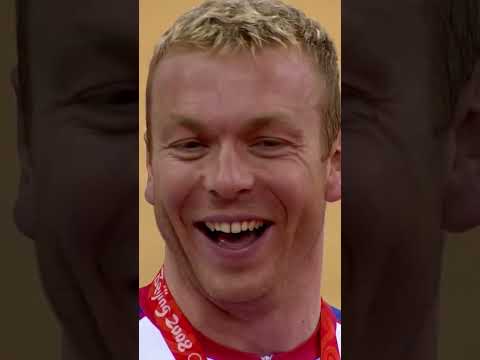 The complete setOTD in 2008, Sir Chris Hoy sealed his THIRD gold of the Beijing Olympic Games in the Men's Sprint TNT Sports marks a new ...0 Reacties 0 aandelen 220 Views
 - CYCLINGUPTODATE.COM"The difference in potential between Pogacar and the rest is what it is, but he's a legend" - Vuelta director explains why races want UAE rider despite dominationTadej Pogacar's Vuelta a Espaa return is upon us as the UAE Team Emirates rider returns to the race where he made his first major breakthrough - seven years on from his debut. Six Grand Tour victories and dozens of marquee victories later, the Slovenian is favourite to complete the Spanish Grand To...0 Reacties 0 aandelen 206 Views
- BIKERUMOR.COMLitespeeds New Pisgah is a Titanium Hardtail Made for Aggressive Trail RidingLitespeed has been handcrafting titanium bike frames of all kinds for many years. Today, the Chattanooga, Tennessee-based brand is entering the trail category and introducing the all-new Pisgah hardtail. With a frame engineered for enhanced strength and designed for aggressive trail riding, Litespeed intends for the Pisgah to slay any notion of what a titanium hardtail trail bike is capable of.Litespeed Pisgah DetailsThe Pisgah is Litespeeds first hardtail made for aggressive trail riding.The original Pisgah hardtail was cross-country oriented and launched way back in 2000. Litespeed is located near the Pisgah National Forest, and tells us that, unlike its XC-oriented predecessor, the new version has a DNA inspired by Pisgahs demanding trails and terrain. Indeed, the area is renowned for its challenging, rocky, and rooty trails.Frame DesignHardtail mountain bikes made for aggressive trail riding need to be super tough, and Litespeed says that its advanced titanium tube shaping and a unique rear-end design built around a Tubular Yoke increase strength and stiffness where it matters most. With the Pisgah, the brand is introducing Superform X, a stronger titanium tubeset. They say it provides the highest levels of strength while also hitting desired flex and stiffness characteristics with variable wall thicknesses and custom-formed, cold-worked 3D shapes.Litespeed claims its engineers have also reimagined the traditional hardtail rear end for both strength and performance. The seat tube passes through the ovalized Superform top tube, which they say allowed them to reduce wall thickness by 30% while also increasing the strength of the joint. Allegedly, this design is resistant to the forces of vertical and lateral loads, even before welding.The Tubular Titanium Yoke and seat tube/top tube junction on the Pisgah frame.At the back of the bike, Litespeed says, the visual star of the show is a new Tubular Titanium Yoke, which significantly widens the seatstay stance. Without any bends, they claim increased lateral stiffness while maintaining the compliant ride feel that titanium is known for. Additionally, the seatstays tapered ends lock into position in the yoke before welding for maximum strength to stand up to the aggressive riding this bike is designed for.The frame has clearance for tires up to 29 x 2.6.GeometryThe Pisgah is designed to be used with a 150mm fork, rolls on 29 wheels front and rear, and has a geometry that reflects its intended use. Overall, the Pisgahs geometry certainly qualifies as aggressive for a hardtail, and thats the point. This is apparent in the head tube angle, which increases from 64 on the XS frame to 64.5 on the S, M, and L, and 65 on the XL. Stack heights are also fairly tall, and reach measurements are right in the wheelhouse of modern standards with 475mm on a size Large. Chainstay length is 445mm on all sizes, and the sliding dropout upgrade gives riders some room to fine-tune if desired.UDH Sliding DropoutsThe Pisgah comes with a UDH interface and is designed to work with any drivetrain setup. Riders can also upgrade to Litespeeds sliding titanium dropouts to fine-tune chainstay length or run a singlespeed setup.Sliding dropouts let you fine-tune chainstay length or run a singlespeed setup.Litespeed Pisgah: Builds, Pricing, AvailabilityLike Litespeeds other frames, the Pisgah is handcrafted in Chattanooga, Tennessee, not far from the Pisgah National Forest. Litespeed says it will be available in a singlespeed configuration with the sliding dropout. The base build starts at $6,999 and comes with Shimano XT Di2, a Fox 36 Factory Grip X fork, and Industry Nine 1/1 Sector V2 Alloy wheels.The Pisgah can also be configured in numerous ways through the brands website. Buyers can choose between Satin Ti and Bright Brushed Ti finishes, as well as numerous logo colors for an additional fee. Upgrade options include drivetrain, wheels, fork, tires, dropper, saddle, stem, handlebar, and grips.The new Pisgah is available to order now. Head to the Litespeed website to learn more or configure yours today.litespeed.com0 Reacties 0 aandelen 258 Views
- WWW.CYCLINGWEEKLY.COMAre the brands still chasing 'peak aero' looking in the wrong place for performance gains?Visit any WorldTour race paddock, and you'll find it littered with radical-looking aero bikes. Tadej Pogaar (UAE Team Emirates XRG) has won prolifically using the Colnago Y1Rs, banishing the V5Rs lightweight bike to the team van. Perhaps most eye-catching is Factor's One bike, with its new take on geometry and wide forks that verged on UCI-illegal. While many brands Specialized with the Tarmac, Cannondale with the SuperSix Evo and Trek via the Madone have dropped dedicated lightweight and aero models in favour of a 'one bike to rule them all' approach, elsewhere, it seems that aero bikes are here to stay. And they look weirder and more wonderful than ever. Tadej Pogaar one-of-one Colnago Y1Rs (Image credit: Aaron Borrill)Pogaar's dominance is such that he could probably ride pretty much any bike in the WorldTour and still win, while the Factor One has seldom been used by either the NSN Cycling team or Human Powered Health, with most riders instead opting for the Ostro VAM 2. Are these latest aero bikes really offering the best solution for riders to be their fastest, or are they perhaps not quite there yet? If so, what refinements might come next?The radical Factor One isn't always used by pro riders on sponsored teams (Image credit: Richard Butcher)Rider and bike, together as oneThere is one annoying trend in the bike industry: vague, unclear testing or white papers. There are often quotes about the watts saved versus another bike, be that a previous generation one from the brand or, quite commonly, the leading competitor. Very often, details are limited: just the speed is given, maybe the yaw angle if were lucky. But it is often neglected which wheels were tested, tyres, handlebar width and geometry setup, or even if a rider was present on the frame for the test or not.Our sister publication Cyclingnews has been testing bikes in the wind tunnel over the last few years. A common trend has been that, just because a bike alone shows itself to be fast, or even slow, with no rider present, it does not necessarily mean that it will maintain that relative position when a rider is added.Some frames may perform badly without a rider, then be significantly faster with a rider present. Meanwhile, others test fast as a frame only, yet drop down the charts once a rider is onboard.Adding a rider makes a huge difference to the performance of a bike (Image credit: Future (Sam Gupta))The reason for this is that a cyclist's legs are two large moving pistons that disrupt airflow and create more frontal area than the entire bike frame and wheels combined. Add a great big torso on top of the bike, and total drag increases dramatically. This is why the performance differences between frames tend to get significantly closer with a rider present. Partly because the total drag percentage of the bike is so small when a rider is present, but also because some aerodynamic features of a bike can be rendered somewhat inept once you add legs on either side of it.Some aerodynamic features of a bike can be rendered somewhat inept once you add legs on either side of itThe industry has taken note of this, and some bikes are being designed and tested with a rider present. In developing the latest Specialized Tarmac SL9, for example, the engineers used a moving-legs mannequin as part of the design process. We may be reaching a point where aerodynamic gains in bike design are slowing down the low-hanging fruit has already been collected but designing bike frames with riders in mind is where we will most likely see the next set of gains.Shape shifting Wide tyres and shorter cranks make a difference (Image credit: Aaron Borrill)There are a few other interesting design features that have become commonplace in cycling, which need to be considered when taking aerodynamics into account. First and foremost, the acceptance of wider tyres.Previously, riders typically used 19-21mm tyres, whereas now 30mm tyres are commonplace, often measuring as wide as 32mm due to the wide rims they are fitted to. The wheel size, however, has remained consistent. These wide tyres marginally increase the height of the bike and the circumference of the wheel. The introduction of shorter cranks has an impact, too. Short cranks, which open a rider's hip angle, require a higher saddle to achieve the same leg extension at the base of the pedal stroke. This again raises the COM and the frontal profile by a small amount and does increase drag.Given that road frames have not changed significantly since tyres have gone from 19- to 32mm, and crank length from 175- to 165mm, there is clearly scope for aerodynamic frames to be designed with these factors in mind. For example, a lower bottom bracket drop would account for shorter cranks, and I think it is likely a design path that frame manufacturers will pursue.Track cycling leads the wayTrack cycling leads the way in aerodynamic innovation, in part because, in individual efforts as well as small-team events like the Team Pursuit, aerodynamics accounts for most of the forces riders must overcome.Factor, for example, takes several design cues from its track bike that won gold at Paris 2024 for Team Australia in the mens team pursuit, and applies those to the Factor One. The latest BMC time-trial bike, used by Stefan Kng and his Tudor Pro Cycling teammates and currently offered to the public in limited quantities, shares several design features with the Hope track bike used by Team GB.BMC's newest Timemachine (Image credit: Getty Images)This wide-fork, high-seatstay design is a perfect example of bikes being designed around riders. The new BMC Timemachine features high seatstays, directly contradicting the approach taken by most brands in their aero bikes. Seatstays dropped across the board when aero bikes first appeared on the scene; doing so reduces frontal area and frame-only drag. But when a rider is present, the difference is smaller. This is where it gets interesting. BMC has not only raised the seatstays, but also deepened them and extended the aerofoil profile forwards. This, in theory, should result in a smoothing of the airflow off the back of the riders legs and decrease turbulent pressure drag behind.The integrated cockpit of the S5 (Image credit: Andy Carr)We are also seeing more customized cockpits and handlebars solutions. This is not new in track or time trial events, but road setups are more tailored now. The latest Cervelo S5 uses a one-piece bar and stem, but what the pros are using features bespoke effective stem lengths, bar widths, and stem angles that are not readily available for the public to use, even if the overall design is the same.Bikes designed for purpose While track and time-trial bikes may influence road design, they're generally designed to travel at much higher, more consistent speeds. A design that is fast at 60-70km/h (track speeds) might not be relatively as fast at 40-50km/h (road race speeds), let alone at WorldTour climbing speeds. In the same way, riders use specific skinsuits for expected race-speed averages; frame designs suitable for track and time trial might not work as well for road racing, let alone for consumer frames.Mathieu van der Poel rides his Canyon Aeroad up the Kapelmuur (Image credit: Getty Images / Tim de Waele)How a bike actually rides also matters. Lets take the radical Colnago Y1Rs and the more traditional Cervelo S5. The Colnago is not quite as refined and direct in the front-end handling, while the rear compliance is not at the same level as the Cervelo S5. Weve tested the S5, and it is genuinely a superbly balanced race bike, with stiffness and comfort where required. The design principles of the bike have remained similar in all its iterations going back over 10 years, but each model has been refined and optimised based on rider feedback.The Cervelo S5 (Image credit: Andy Carr)Potentially, the reason the Factor One has not been used as much at the pro level is that, given its design choices, it lacks versatility. Tech editor Aaron Borrill, who tested the Factor One, found it was an absolute rocket at higher speeds. But, several design elements and feedback Ive heard suggest that it is not the most comfortable for long days in the saddle. The Factor One might be fast, but feedback over its long-ride comfort has been less positive (Image credit: Richard Butcher)Its also been suggested that it can be prone to variable wind directions experienced at lower speeds and when riding in a bunch. Its a great piece of specialist design, and I applaud Factor for it. But being a revolutionary bike, it will likely need some refinements to find that balance between out-and-out aero and a bike that offers all-day compliance, comfort, and confidence.The weight factorAero frame design can be held back by our obsessions around weight. Weve seen with the new Giant Propel, Merida Reacto, and Trek and Specialized converging on a do-it-all aero lightweight bike that some manufacturers are still chasing low weight over total aero efficiency. This does result in a somewhat compromised aero bike, but one that can hit the 6.8kg UCI weight limit, or even drop below it for consumers.Merida's latest Reacto aero bike (Image credit: Aaron Borrill)The aero bikes, even if heavier, are faster, with the caveat that speed remains consistent. Even over longer climbs with some accelerations, a 500g weight difference does not hinder the aero bike, especially at the WorldTour level. But there is a tangible difference between a bike that is 500g lighter vs a frame that is five watts less draggy. Psychologically, we can feel the weight difference, but not the watt difference. Personally, I can also attest that a lightweight bike is more fun to ride. It is lively, accelerates perceptively faster, and feels nimble and effortless. I used to train on my TT bike and do 40km/h endurance rides, but it felt sluggish to accelerate, climb, and descend, even though it was undoubtedly faster. I cant feel the difference between riding at 30- or 32km/h, but removing a bottle from my bike makes it feel better to ride, which in my mind has a psychological impact.The final wordEven though we are seeing some wild and wacky aero bike designs, in my opinion, they are not going far enough, given how technology and equipment choices have advanced. We are starting to see more technology from track cycling make its way into bike design, as are rider- and frame-engineered solutions. But larger tyres and shorter cranks accommodating new frame designs might be the most interesting direction that frame design will likely travel.Of course, this needs to be balanced with the other factors that contribute to a good bike. There is a good chance that the next lot of revolutionary aero bikes will be refinements of what we are seeing now, with features that improve ride quality, not just wind-tunnel performance numbers. But there will still be the ever-present limitation of weight, where riders are unwilling to sacrifice the tangible, perceptible difference of a lighter bike, versus the less perceptible to humans yet clearly genuine advantage of a less draggy bike.0 Reacties 0 aandelen 218 Views
- CYCLINGUPTODATE.COMLIVE - Renewi Tour Stage 1 - First clash of the titans as the worlds best sprinters battle for YellowGood morning and welcome to the liveblog of the Stage 1 of the 2026 Renewi Tour. One of the most eagerly anticipated stage races designed for sprinters gets under way today, and we are sure to witness some thrilling battles, not only for the stage victory, but also at the intermediate and bonus spri...0 Reacties 0 aandelen 213 Views
- WWW.CYCLINGWEEKLY.COMTadej Pogaar, Wout van Aert, Oscar Onley and more: Vuelta a Espaa 2026 start listWith the Tour de France still recent enough that it can still be glimpsed in the rear-view mirror, it's time for the third and final men's Grand Tour of the season the Vuelta a Espaa.While it so often plays a subordinate role to its French and Italian counterparts, this year it finds itself in the limelight thanks to the participation of recent Tour winner Tadej Pogaar (UAE Team Emirates-XRG). It's only his second participation, and the first since 2019, when he was still a mere mortal, albeit one for whom the future looked starry.Victory here would mean he has won every Grand Tour a feat achieved by his closest rival Jonas Vingegaard earlier this season. Visma-Lease a Bike's Vingegaard will not be challenging the Slovenian at the Vuelta, but he will face opposition from other quarters.Four-time Vuelta winner Primo Rogli (Red Bull-Bora-hansgrohe) leads the challengers, who also boast Oscar Onley (Netcompany-Ineos), Felix Gall (Decathlon CMA CGM) and Richard Carapaz (EF Education-EasyPost) in their ranks. Against Pogaar they know they have a dizzying task, but he is human like the everyone else on the start list, and carrying the mental and physical fatigue of a recent Tour de France victory. Anything could happen.Read on for the full startlist, with only Netcompany-Ineos and Pinarello Q36.5 still to be confirmed. There are 23 teams with 184 riders at the race, so eight per squad.Tour de France 2026 start listAlpecin-Premier TechRamses Debruyne (Bel, 23)Kaden Groves (Aus, 27)Michael Gogl (Aut, 31)Francesco Busatto (Ita, 23)Sente Sentjens (Bel, 20)Lindsay De Vylder (Bel, 31)Gal Glivar (Svn, 24)Hugo Houle (Can, 35)Bahrain VictoriousPello Bilbao (Esp, 36)Santiago Buitrago (Col, 26)Roman Ermakov (Svn, 21)Pau Miquel (Esp, 25)Matev Govekar (Svn, 26)Jakob Omrzel (Svn, 20)Mathijs Paasschens (Ned, 30)Attila Valter (Hun, 28)Decathlon CMA CGMLo Bisiaux (Fra, 21)Oscar Chamberlain (Aus, 21)Sander De Pestel (Bel, 27)Felix Gall (Aut, 28)Jordan Labrosse (Fra, 23)Gregor Mhlberger (Aut, 32)Matthew Riccitello (USA, 24)Callum Scotson (Aus, 30)EF Education-EasyPostRichard Carapaz (Ecu, 33)James Shaw (Gbr, 30)Vincenzo Albanese (Ita, 29)Markel Beloki (Esp, 21)Alastair Mackellar (Aus, 25)Darren Rafferty (Irl, 23)Georg Steinhauser (Ger, 25)Juan Felipe Rodriguez (Col, 25)Groupama-FDJ UnitedGuillaume Martin (Fra, 33)Olivier Le Gac (Fra, 33)Rudy Molard (Fra, 36)Clment Berthet (Fra, 29)Bastien Tronchon (Fra, 24)Enzo Paleni (Fra, 23)Valentin Madouas (Fra, 29)Rmy Rochas (Fra, 30)Jayco-AlUlaPaul Double (Gbr, 30)Finlay Pickering (Gbr, 22)Alessandro Covi (Ita, 27)Asbjrn Hellemose (Den, 27)Jasha Stterlin (Ger, 33)Hamish McKenzie (Nzl, 21)Koen Bouwman (Ned, 32)Rudy Porter (Aus, 25)Lidl-TrekMattias Skjelmose (Den, 25)Mads Pedersen (Den, 30)Thibau Nys (Bel, 23)Julien Bernard (Fra, 34)Lennard Kmna (Ger, 29)Patrick Konrad (Aut, 34)Jacopo Mosca (Ita, 33)Mathias Norsgaard (Den, 29)Lotto-IntermarchJarno Widar (Bel, 20)Lars Craps (Bel, 23)Luca Van Boven (Bel, 26)Vito Braet (Bel, 25)Steffen De Schuyteneer (Bel, 21)Lorenzo Rota (Ita, 31)Roel Van Sintmaartensdijk (Ned, 25)Reuben Thompson (Nzl, 25)MovistarOrluis Aular (Ven, 29)Enric Mas (Esp, 31)Cian Uijtdebroeks (Bel, 23)Ivn Romeo (Esp, 23)Carlos Canal (Esp, 25)Jorge Arcas (Esp, 34)Ral Garca Pierna (Esp, 25)Pablo Castrillo (Esp, 25)Netcompany-Ineos (prov.)Carlos Rodrguez (Esp, 25)Laurens De Plus (Bel, 30)Oscar Onley (Gbr, 23)NSN CyclingGeorge Bennett (Nzl, 36)Jan Hirt (Cze, 35)Hugo Hofstetter (Fra, 32)Moritz Kretschy (Ger, 23)Alexey Lutsenko (Kaz, 33)Pau Mart (Esp, 21)Nick Schultz (Aus, 32)Floris Van Tricht (Bel, 25)Picnic PostNLGuillermo Juan Martinez (Col, 21)Mattia Gaffuri (Ita, 27)Chris Hamilton (Aus, 31)Henri-Franois Renard-Haquin (Fra, 23)Timo De Jong (Ned, 27)Gijs Leemreize (Ned, 26)Oliver Peace (Gbr, 21)Timo Roosen (Ned, 33)Red Bull-Bora-hansgrohePrimo Rogli (Slo, 36)Gianni Vermeersch (Bel, 33)Luke Tuckwell (Aus, 21)Finn Fisher-Black (Nzl, 24)Jordi Meeus (Bel, 27)Gianni Moscon (Ita, 32)Callum Thornley (Gbr, 24)Frederik Wandahl (Den, 24)Soudal Quick-StepFabio Van Den Bossche (Bel, 25)Steff Cras (Bel, 30)Alberto Dainese (Ita, 28)Gianmarco Garofoli (Ita, 23)Ethan Hayter (Gbr, 27)Filippo Zana (Ita, 27)Mikel Landa (Esp, 36)Valentin Paret-Peintre (Fra, 25)UAE Team Emirates-XRGTadej Pogaar (Slo, 27)Joo Almeida (Por, 28)Jay Vine (Aus, 30)Pavel Sivakov (Fra, 29)Pablo Torres (Esp, 20)Kevin Vermaerke (USA, 25)Ivo Oliveira (Por, 29)Domen Novak (Slo, 31)Uno-X MobilityTobias Halland Johannessen (Nor, 26)Andreas Kron (Den, 28)Fredrik Dversnes (Nor, 29)Rasmus Tiller (Nor, 30)Magnus Cort (Den, 33)Simon Dalby (Den, 25)Martin Tjtta (Nor, 25)Andreas Leknessund (Nor, 27)Visma-Lease a BikeWout Van Aert (Bel, 31)Matthew Brennan (Gbr, 21)Jrgen Nordhagen (Nor, 21)Ben Tulett (Gbr, 24)Steven Kruijswijk (Ned, 39)Christophe Laporte (Fra, 33)Bruno Armirail (Fra, 32)Sepp Kuss (USA, 31)XDS-AstanaHenok Mulubrhan (Eri, 26)Harold Tejada (Col, 29)Cristin Rodrguez (Esp, 31)Lorenzo Fortunato (Ita, 30)Victor Langellotti (Mco, 31)Darren Van Bekkum (Ned, 24)Yevgeniy Fedorov (Kaz, 26)Alessandro Romele (Ita, 22)Tudor Pro CyclingMarco Brenner (Deu, 23)Stefan Kng (Che, 32)Will Barta (USA, 30)Arthur Kluckers (Lux, 26)Roland Thalmann (Che, 33)Larry Warbasse (USA, 36)Fabian Weiss (Che, 24)Hannes Wilksch (Deu, 24)CofidisBryan Coquard (Fra, 34)Emanuel Buchmann (Ger, 33)Alexis Renard (Fra, 27)Alex Kirsch (Lux, 34)Sylvain Moniquet (Bel, 28)Paul Ourselin (Fra, 32)Louis Rouland (Fra, 23)Sergio Samitier (Esp, 30)Pinarello Q36.5 (prov.)Milan Vader (Ned, 30)David De La Cruz (Esp, 37)Walter Calzoni (Ita, 25)Marcel Camprub (Esp, 24)Burgos BurpelletJess Herrada (Esp, 36)Jos Manuel Daz (Esp, 31)Sergio Geovani Chumil (Gua, 25)Jos Luis Faura (Esp, 25)Mario Aparicio (Esp, 26)Sinuh Fernndez (Esp, 26)Clment Alleno (Fra, 25)Csar Macas (Mex, 27)Kern PharmaIvn Cobo (Esp, 25)Urko Berrade (Esp, 31)Marc Brustenga (Esp, 27)Iigo Elosegui (Esp, 27)Ibon Ruiz (Esp, 30)Ivn Ramiro Sosa (Col, 28)Diego Uriarte (Esp, 23)Mats Wenzel (Lux, 23)0 Reacties 0 aandelen 209 Views

 English
 Arabic
 French
 Spanish
 Portuguese
 Deutsch
 Turkish
 Italiano
 Russian
 Romaian
 Portuguese (Brazil)
 Greek
Greek